

Rapid advancements in the field of artificial intelligence (AI) are demonstrating the indispensable role of this technology. Experts in national security are now focusing on the impact of AI on defense strategies. One leading figure in this field is Paulo Shakarian, renowned for his expertise in symbolic AI and neuro-symbolic systems, which are advanced forms of AI. Shakarian is dedicated to meeting the complex needs of national security organizations. He has been selected to participate in AI Forward, an initiative by the U. S. Defense Advanced Research Projects Agency (DARPA) that aims to explore new AI research directions to develop trustworthy systems for national security missions. Shakarian, an associate professor of computer science at the School of Computing and Augmented Intelligence within the Ira A. Fulton Schools of Engineering at Arizona State University, has been invited to attend AI Forward, which consists of two workshops. The first workshop was a virtual meeting held earlier this summer, and the second will be an in-person event scheduled to take place in Boston from July 31 to August 2. Shakarian will collaborate with 100 other attendees to advance DARPA's initiative, which explores novel AI research directions with implications for defense-related tasks such as autonomous systems, intelligence platforms, military planning, big data analysis, and computer vision. During the Boston workshop, Shakarian will be joined by Nakul Gopalan, an assistant professor of computer science, who will also explore how his research in human-robot communication can contribute to DARPA's goals. At the event, Shakarian will engage in discussions with a select group of researchers about the intersection of AI and security, aiming to develop security solutions for the U. S. Department of Defense. He will also explore current research trends in the field and anticipate future challenges. In addition to his involvement in AI Forward, Shakarian is preparing to release a new book in September 2023 titled "Neuro-symbolic Reasoning and Learning. " This book will delve into the latest five years of research in neuro-symbolic AI, providing insights into recent advancements in the field. As Shakarian gets ready for the workshops, he took a moment to share his research expertise and thoughts on the current landscape of AI. Question: Could you explain your research focus areas of symbolic AI and neuro-symbolic systems? Answer: To understand symbolic AI and neuro-symbolic systems, it's important to consider the current state of AI, primarily dominated by deep-learning neural networks. These networks have experienced remarkable advancements in the past decade, particularly in areas like image recognition and language generation. However, when it comes to problems specifically relevant to the Department of Defense (DoD), these AI technologies fall short. One of the challenges is their lack of explainability, as they operate as black box models that provide results without clear explanations. Additionally, these systems lack modularity since they are trained end to end, making it difficult to modify them once they are trained. In complex DoD systems, such as evaluating the safety of individual components of an airplane during assembly, modularity is crucial, which is an issue with deep learning. Another problem is the inability of neural networks to enforce constraints, such as deconflicting multiple aircraft sharing the same airspace. Symbolic AI, which has been around longer than neural networks, does not rely on vast amounts of data for learning. However, it has not reached the learning capacity of neural networks. Nonetheless, symbolic AI can address the limitations of deep learning mentioned earlier. In cases with high safety requirements, like defense, aerospace, and autonomous driving, there is a need to leverage large amounts of data while considering safety constraints, modularity, and explainability. The field of neuro-symbolic AI aims to combine machine learning ideas with symbolic approaches, and I have been exploring this intersection for nearly a decade. Question: Can you share your current research projects and focus in your lab? Answer: My primary focus in my lab, Lab V2, is a software package called PyReason. With the rise of neural networks, we have witnessed the development of excellent software tools like PyTorch and TensorFlow, which streamline the implementation of neural networks. However, in neuro-symbolic AI literature, researchers tend to reinvent logic methodologies to suit their specific needs. Many of these methodologies already have substantial existing literature. In developing PyReason, my collaborators and I aimed to create a robust logic platform explicitly designed to work with machine learning systems. We have secured three to four active grants for this project, and the software has been downloaded by researchers, making it our primary area of work. Our goal was to create a powerful software tool that eliminates the need to repeatedly reimplement existing logical components.
PyReason provides a mature, relatively bug-free logic platform to facilitate research in this domain. Question: What initially attracted you to engineering and motivated you to pursue work in this field? Answer: My journey to this point has been quite interesting. After high school, I attended the United States Military Academy at West Point and subsequently became a military officer in the U. S. Army's 1st Armored Division. I served two combat tours in Iraq, and during my second tour, my unit assigned me to DARPA as an advisor for a three-month temporary assignment. This opportunity allowed me to observe how some of the top scientists in the country were applying AI to address critical defense problems. I became deeply interested in the fields of intelligence and autonomy. With a background in military intelligence and experience working in infantry and armor units, I witnessed firsthand how intelligence assets supported our operations. The work at DARPA was far beyond what I was doing manually. Inspired by the possibilities, I applied to a special program to pursue a graduate degree focusing on AI and also taught at West Point as part of the program. After fulfilling my military service, I joined the faculty at ASU in 2014. Question: As a professional researcher in this field, amidst the media hype and concerns surrounding AI, do you believe we are close to witnessing truly transformative applications across various industries? Answer: Yes, I do believe so. We have already witnessed the transformative impact of convolutional neural networks in image recognition, with applications integrated into smartphones, security cameras, and more. We are likely to see something similar with large language models. However, large language models have their challenges, such as hallucination, where the models provide incorrect answers or information. Moreover, the lack of explainability in neural models raises safety concerns, similar to other neural models. Companies like Google and OpenAI are conducting extensive testing to address these potential issues, but it is impossible to test for every possible scenario. Nevertheless, in the coming years, we can expect to see an expansion in the context window of large language models, allowing for greater data input and improving training and utilization. Numerous techniques introduced in the past year will significantly enhance accuracy in everyday use cases, leading to a lower error rate. Large language models play a vital role in generating computer code, a potentially transformative outcome. Faster code writing enables faster innovation. These models will continue to empower researchers as engines of innovation, especially in the U. S. where such tools are readily available. Question: In terms of national security, do you foresee AI applications becoming visible to the general public, such as autonomous vehicles on the roads, or will they primarily remain behind the scenes? Answer: When I was involved in my startup company, I learned the importance of embedding AI in solutions that people understand in their daily lives. In the case of autonomous vehicles, the goal is to make them behave like normal cars, with the only difference being the absence of a driver in the driver's seat. However, one exception to this trend is ChatGPT, which has had a transformative impact. Despite this, I have some doubts about whether our current interfaces will remain the primary mode of interaction with AI. OpenAI also shares this perspective. I anticipate further development to better integrate technologies like ChatGPT into our regular workflows. We all employ tools to enhance our productivity, but there are always small costs associated with their use. For instance, using ChatGPT currently requires switching to a new window, logging in, and waiting for a response. If you only need to compose a brief email, these steps may not seem worth it, leading to underutilization of this impactful tool. If ChatGPT were more seamlessly integrated into existing processes, its usage and impact would differ. It is an incredibly compelling technology, which is why it was initially released in a simple, external chat format.
None



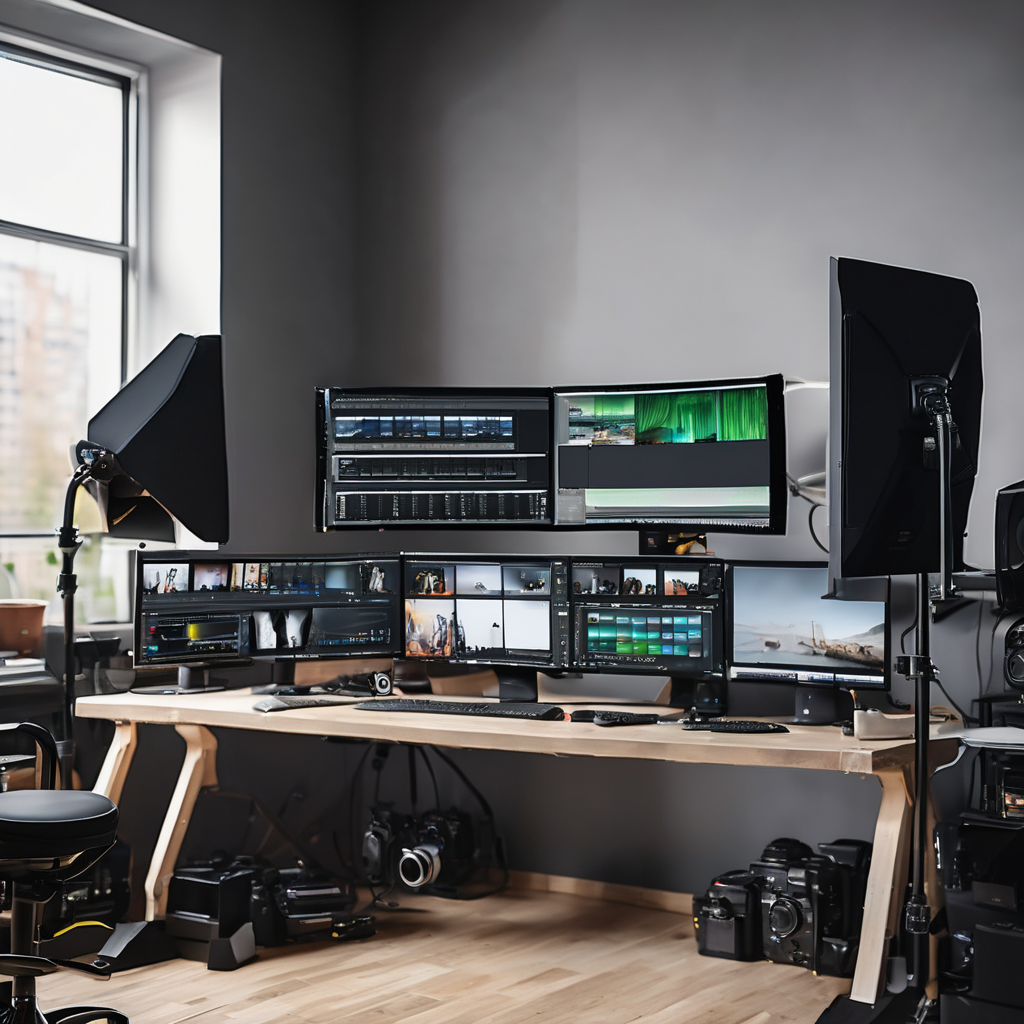
In recent years, photography and videography have advanced significantly—sensors are more powerful, and even smartphones can capture impressive footage.

Apple has recently unveiled major updates to its virtual assistant, Siri, incorporating cutting-edge artificial intelligence (AI) to significantly enhance user interaction and personalization.

At the recent WIRED Big Interview conference in San Francisco, AMD CEO Lisa Su addressed widespread concerns about a potential bubble in the artificial intelligence (AI) sector.

Semrush has introduced Semrush Enterprise AIO, a new enterprise platform designed to help businesses monitor, manage, and optimize their brand presence across AI-powered search platforms.

Summary Funding Expansion: Gradial has raised $35 million in a Series B funding round led by VMG Partners

Vista Social, a leading social media marketing platform, has unveiled a new, powerful feature: the integration of Canva’s AI Text to Image generator.

Tesla, Inc.
Launch your AI-powered team to automate Marketing, Sales & Growth

and get clients on autopilot — from social media and search engines. No ads needed
Begin getting your first leads today


Lorem ipsum dolor sit amet consectetur adipisicing elit. Fuga dolor minus maiores. Aut vero expedita dicta, dolorem odit excepturi odio doloremque voluptatem repellat aliquam? Dolores nemo eum id pariatur! Nobis!

Create your own avatar to work for you — completely free of charge!
Sign up with Google

We've sent a confirmation email to
Please check your inbox and click the link to complete your registration
Didn’t receive it? Check your Spam or Promotions folder
and get clients without any advertising investment!

Create and publish viral social media content on autopilot



AI sales managers work 24/7, with no need for sleep, food, or breaks, and speak all languages.
You have unsubscribed from the mailing list recklessly but successfully.
We are not saying goodbye and look forward to seeing you again.