
Revolutionary AI Weather Forecasting: Aardvark Model Achieves Supercomputer Accuracy in Seconds
Brief news summary
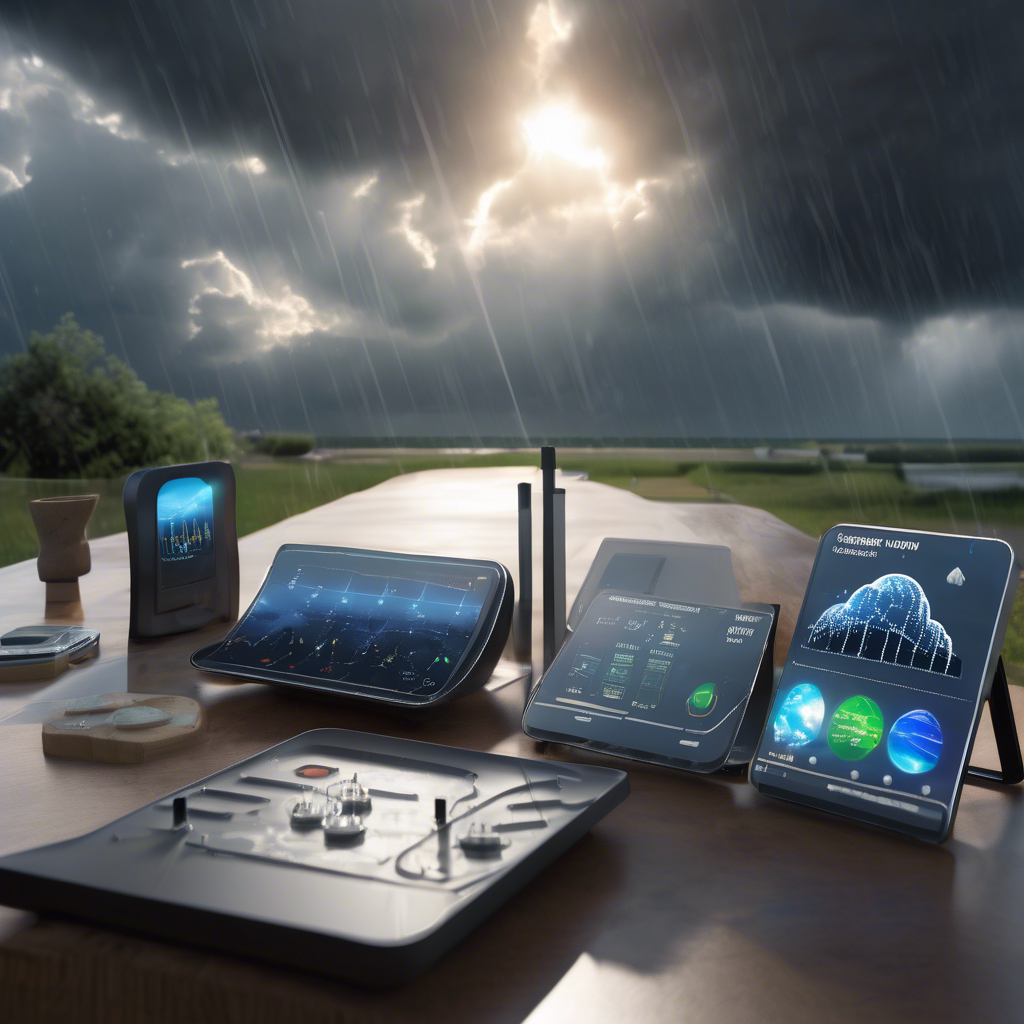
Aardvark Weather, created by researchers at the University of Cambridge, is a groundbreaking AI weather model that delivers accurate forecasts in just one second on a standard desktop, dramatically outperforming traditional supercomputers that can take hours or even days. While earlier AI models improved forecast speed, they struggled with organizing observational data effectively during initialization. Aardvark Weather stands out by combining forecasting with initialization and using only 10% of the data that traditional methods require, all while maintaining similar accuracy. However, its grid resolution of 1.5 degrees may overlook smaller weather phenomena due to its coarse granularity. Critics recognize Aardvark's ability to identify rare weather events but point to its dependence on physics-based training data as a limitation. Experts believe that with continued advancements in data organization and neural network architecture, AI could surpass conventional forecasting methods, resulting in quicker and more precise weather predictions in the future.Creators of a new AI weather program assert that it can achieve the same level of accuracy as conventional forecasts produced over hours or days on powerful supercomputers within just one second on a desktop. Since the 1950s, weather forecasting has predominantly depended on physics-based models that analyze data from satellites, balloons, and weather stations. These calculations, known as numerical weather prediction (NWP), demand substantial computing resources and energy, utilizing large, costly supercomputers. Recently, there have been efforts to enhance this process with AI. For instance, Google researchers developed an AI tool last year that could substitute complex code in sections of a weather model, significantly reducing the required computational power. DeepMind then advanced this approach by employing AI to generate the entire forecast, which was adopted by the European Centre for Medium-Range Weather Forecasts (ECMWF) with the introduction of the Artificial Intelligence Forecasting System last month. However, this gradual integration of AI in weather prediction hasn't eliminated all traditional computational methods, a gap that Richard Turner from the University of Cambridge and his team aim to address with their new model. Turner notes that previous efforts focused solely on forecasting and overlooked the vital initialisation step, in which data from global satellites, balloons, and weather stations is combined and organized into a structured grid. “That process consumes half the computational resources, ” he emphasizes. The researchers developed a system called Aardvark Weather, which replaces both the forecasting and initialisation stages for the first time. Aardvark utilizes only 10 percent of the input data that current systems need while producing results comparable to leading NWP forecasts, as highlighted in their study. Compiling a full forecast, typically requiring hours or days on a supercomputer for NWP, can now be accomplished in about one second on a standard desktop with Aardvark. Nonetheless, Aardvark operates on a grid model of the Earth’s surface with cells measuring 1. 5 degrees square, in contrast to the ECMWF's ERA5 model, which features cells as small as 0. 3 degrees. This larger grid size means Aardvark may miss intricate and unexpected weather patterns, according to David Schultz from the University of Manchester. “There are many unresolved factors that could disrupt your forecast, ” Schultz states.
“At this scale, they fail to represent extremes effectively. ” Turner contends that Aardvark may outperform some existing models when identifying rare events such as cyclones. However, he acknowledges that AI models like his still rely heavily on physics-based models for their training. “It absolutely fails if you remove the physics model training data and only use observational data, ” he admits. “We attempted to create a completely physics-free model, but the results weren't successful. ” Turner envisions a future where weather forecasting involves scientists refining ever-more precise physics-based models that, in turn, train AI systems to replicate their outputs more quickly and efficiently. Some, like Nikita Gourianov from the University of Oxford, are even more hopeful, predicting that AI could eventually produce weather forecasts that exceed NWP capabilities, solely using observational and historical weather data. “It’s a matter of both scale and ingenuity, ” he notes. “Being clever about data input and structuring the neural network is crucial. ”
Watch video about
Revolutionary AI Weather Forecasting: Aardvark Model Achieves Supercomputer Accuracy in Seconds
Try our premium solution and start getting clients — at no cost to you

I'm your Content Creator.
Let’s make a post or video and publish it on any social media — ready?

Content Maker

Last news
The Best for your Business
Hot news

Apple earnings live updates: AI strategy under th…
Morgan Stanley analyst Erik Woodring anticipates weak stock performance following Thursday’s earnings report, expecting investors to be underwhelmed by iPhone sales.

Walter Isaacson's new biography company counts on…
Last year, recent Tulane graduate Ishaan Pomichter, a tech enthusiast, took a digital technology class with renowned biographer Walter Isaacson.

SenseTime and Cambricon Collaborate to Build Next…
Chinese AI pioneer SenseTime has announced a strategic partnership with semiconductor company Cambricon, marking a major advance in next-generation AI infrastructure.

SEO Is Over: How To Get AI To Recommend Your Smal…
Customers are no longer just typing keywords into a search bar; instead, they are turning to ChatGPT, Perplexity, and Google AI Overviews to get recommendations.
AI-video firm Higgsfield is attracting artists an…
Over 15 million individuals are producing GenAI videos using the platform developed by the startup Higgsfield, which recently secured $130 million in a Series A funding round, valuing the company at over $1.3 billion.

The Role of AI in Personalizing Marketing Campaig…
Personalization has become a vital aspect of effective marketing, representing a major shift in how brands engage with their audiences.

Leveraging AI for Advanced SEO Analytics and Repo…
In the swiftly evolving domain of search engine optimization (SEO), maintaining a competitive edge requires embracing the latest tools and technologies.
AI Company
Launch your AI-powered team to automate Marketing, Sales & Growth

and get clients on autopilot — from social media and search engines. No ads needed
Begin getting your first leads today

Your News is ready
Your article is ready

Lorem ipsum dolor sit amet consectetur adipisicing elit. Fuga dolor minus maiores. Aut vero expedita dicta, dolorem odit excepturi odio doloremque voluptatem repellat aliquam? Dolores nemo eum id pariatur! Nobis!
Generating video takes longer than text.







