AI-Driven Aerospike Engine Achieves Successful Hot-Fire Test
Brief news summary
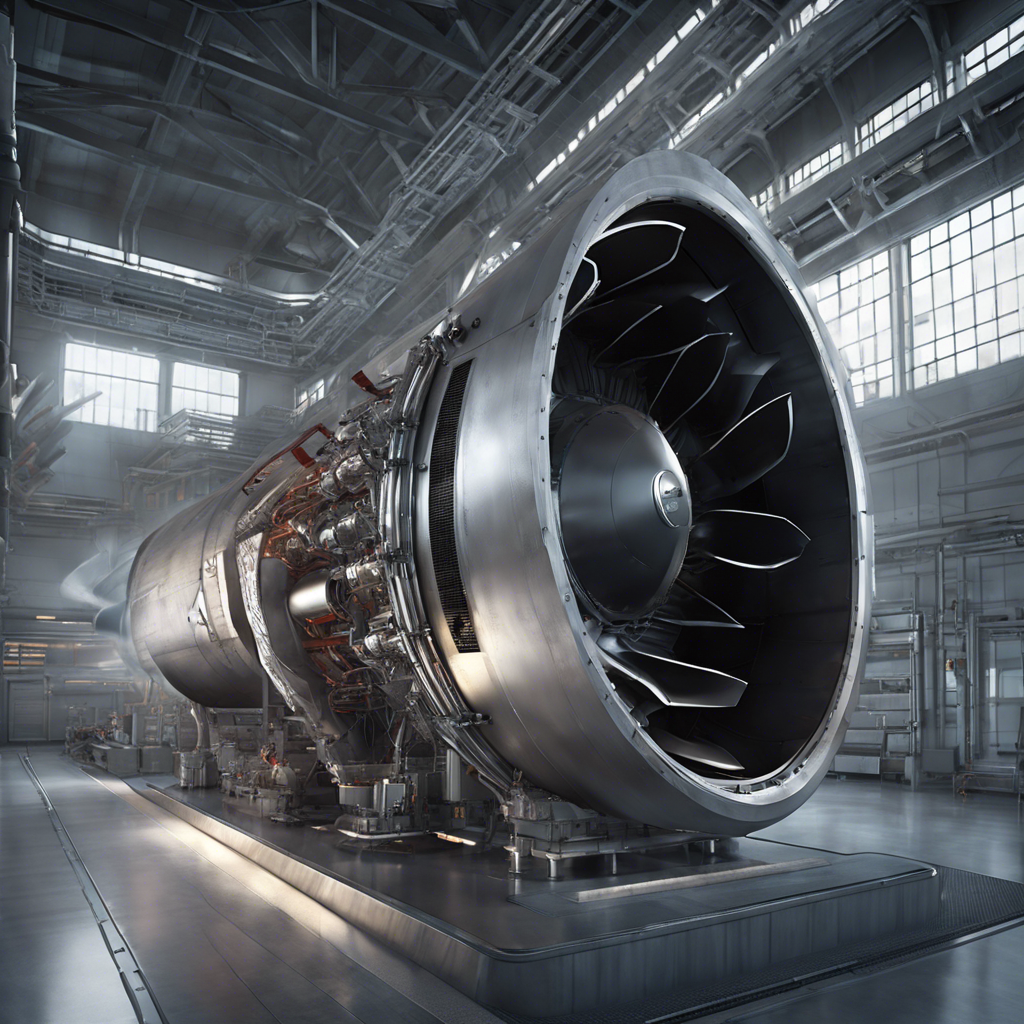
LEAP 71, a company based in Dubai, has achieved a significant milestone in AI-driven aerospace engineering by developing a 1,100-pound thrust aerospike engine fueled by oxygen and kerosene. This innovative engine was designed using the Noyron Large Computational Engineering Model, enabling its unique spike-like structure to adjust to varying altitudes better than traditional engines. Remarkably, the AI completed this intricate design in just three weeks, a process that usually takes years. The engine was crafted using 3D printing technology and successfully tested on December 18th, 2024, in England. It demonstrated its ability to withstand extreme temperatures with an advanced cooling system utilizing cryogenic oxygen and kerosene channels. Under the guidance of CEO Josefine Lissner, LEAP 71 showcases AI's critical role in enhancing the efficiency of modeling and prototyping. These innovations indicate a future in which AI considerably accelerates aerospace development, offering transformative capabilities through the analysis of complex patterns and detailed simulations.Highlighting the advancements in AI engineering, a new aerospike engine featuring oxygen and kerosene combustion has achieved a successful hot-fire test, producing 1, 100 lb (5, 000 N) of thrust. This engine was entirely designed using an advanced Large Computational Engineering Model. Creating cutting-edge aerospace engines typically involves years of complex modeling, testing, and refining. With the power to recognize patterns, conduct sophisticated analyses, develop virtual prototypes, and execute countless model simulations, engineering AIs are revolutionizing the aerospace sector in unexpected ways, assuming they are correctly programmed and trained. Otherwise, it’s the old adage of “garbage in, garbage out, ” the foundational rule of computing since the era of radio valves and electromechanical relays. Dubai-based LEAP 71 is showcasing the potential of modern engineering AI by using it to tackle one of the more unconventional rocket engine designs: the aerospike. Traditional rockets employ a bell-shaped nozzle to channel and expand hot gases from the engine post-Venturi nozzle. While effective, this design has a significant drawback: each bell must be custom-designed for specific altitudes, causing rockets to perform optimally during liftoff but less efficiently as they ascend and air pressure decreases. This is why the engines in different rocket stages vary. Ideally, engineers seek an engine that can automatically adjust to fluctuating air pressure. An aerospike addresses this by structuring the engine into a spike or plug resembling the interior curve of a rocket bell. As combustion gases pass over the spike, its curve functions as one side of a bell, with the surrounding air forming the other. The virtual bell reshapes with changing air pressure. Several aerospike engines have been developed since the 1950s, with one even achieving flight, but turning this innovative concept into a viable space engine remains a challenge. LEAP 71 has applied its Noyron Large Computational Engineering Model to this issue.
This AI is programmed and trained by aerospace specialists to transform a set of input parameters into a viable design, inferring interactions among various factors, such as thermal behaviors and expected performance. The AI’s output is reassessed to refine its performance estimates, engine geometry, manufacturing specifications, and other details. According to LEAP 71, Noyron autonomously conceived the new aerospike in approximately three weeks. The prototype was created as a single copper block via Selective Laser Melting, a form of industrial 3D printing, before being tested. On December 18, 2024, the engine passed its initial test firing, enduring gas temperatures of 3, 500 °C (6, 300 °F). This venture was part of a four-engines-in-four-days initiative by LEAP 71 at Airborne Engineering in Aylesbury, England. “We extended Noyron’s physics capabilities to accommodate the unique complexity of this engine, ” stated Josefine Lissner, CEO and Co-Founder of LEAP 71. “The spike is cooled by intricate channels filled with cryogenic oxygen, while the chamber exterior uses kerosene fuel for cooling. I am very encouraged by this test’s results, as nearly every engine aspect was innovative and unproven. It’s a strong endorsement of our physics-driven computational AI approach. ”
Watch video about
AI-Driven Aerospike Engine Achieves Successful Hot-Fire Test
Try our premium solution and start getting clients — at no cost to you