
Transformations in Drone Warfare: The Shift in the Ukraine Conflict
Brief news summary
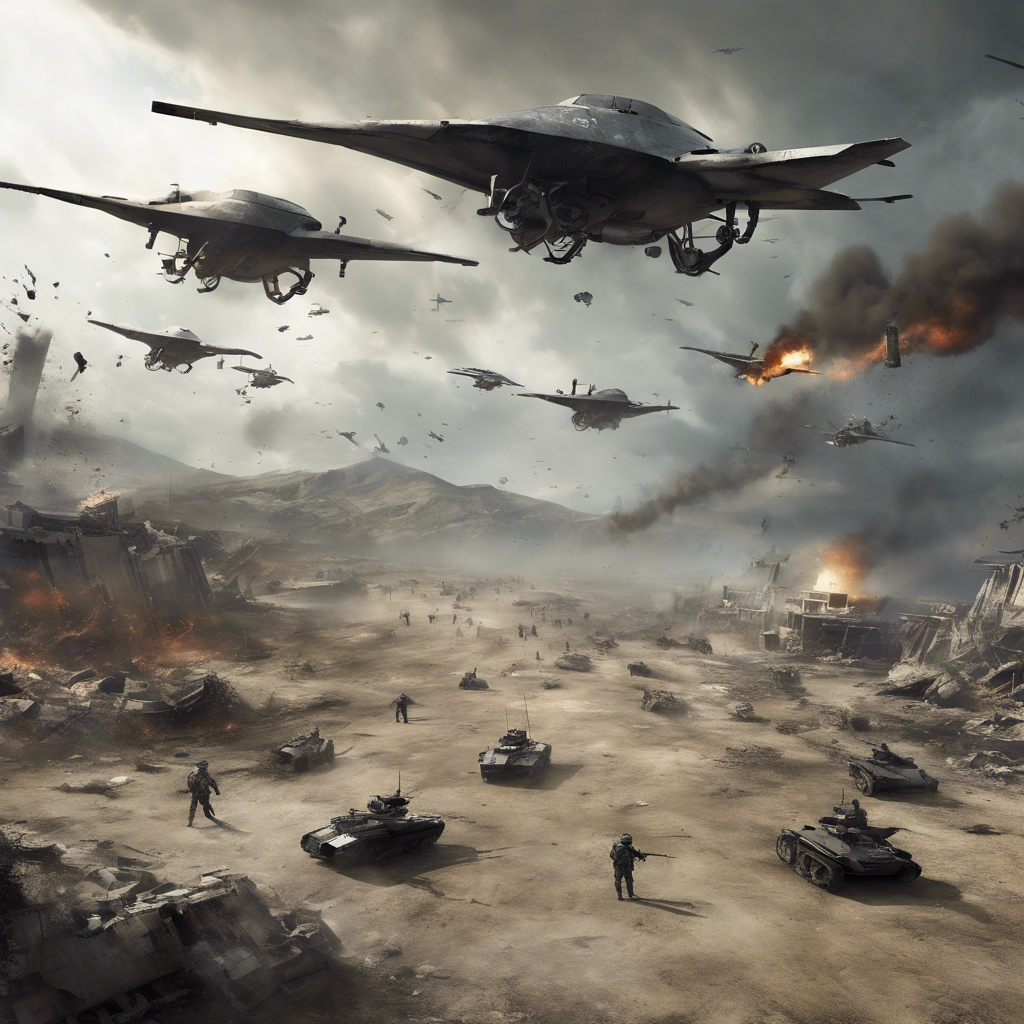
As the Ukraine conflict approaches its third anniversary, attention is shifting to the role of robotic warfare, particularly the rise of AI-driven kamikaze drones. This marks a significant shift in drone technology, evolving beyond traditional Inertial Navigation Systems (INS) and SATNAV towards more accessible options like quadcopters with First-Person View (FPV) technology, allowing manual control without costly navigation systems, though they have limited operational range. Both Ukrainian and Russian forces are enhancing their drone capabilities with advanced AI and machine vision, leading to improved targeting accuracy in environments where GPS is unavailable. Ukraine has recently introduced the V-BAT drone with an impressive 500 km range, while Russia has deployed the budget-friendly Ovat-S model. The growing dependence on robotic technologies, particularly drones, is increasingly shaping the conflict. As technology progresses, the effectiveness and implications of these systems are expected to expand, fundamentally altering military strategies in the ongoing war.Nearly three years ago, the conflict in Ukraine began with traditional combat between Ukrainian and Russian forces, but it has since transformed into a sophisticated battleground featuring both human soldiers and advanced robotic warfare, particularly AI-enabled kamikaze drones. This shift, largely unobserved perhaps due to ongoing media fatigue about drone technology, has fundamentally altered the nature of warfare. **Advancements in Drone Technology** Initially, loitering kamikaze drones were regarded as groundbreaking weapons, utilizing Inertial Navigation Systems and satellite navigation to identify and engage targets. As the war progressed, both sides began utilizing inexpensive quadcopter drones for similar purposes through first-person view (FPV) controls, which provided a more cost-effective alternative but limited their operational range due to battery constraints. As the conflict advanced, the two adversaries developed drones with enhanced capabilities, incorporating artificial intelligence and machine vision. These advanced drones could operate in electronic warfare environments, identify targets autonomously, and navigate even in communications or GPS-denied settings. **Notable Developments in Drone Warfare** Ukraine recently deployed the V-BAT, an advanced AI-enabled kamikaze drone developed by Shield AI. Capable of operating autonomously over long distances (up to 500 km) and with extended loitering time (up to 10 hours), the V-BAT outclassed existing drones used by both Ukrainian and Russian forces.
It can be launched from various platforms, including ships, and is suited for operations in challenging terrains. Conversely, Russia's Ovat-S drone, which is less advanced, still utilizes AI and machine vision to engage targets effectively, even in the absence of GPS. It can function under jamming conditions, but its operational range is limited to around 8 km and it has a shorter flight duration and payload capacity compared to the V-BAT. **Cost Comparison and Future Implications** While the Ovat-S drone is relatively inexpensive to manufacture (costing between $410 to $710 USD), the exact price of the V-BAT remains undisclosed, though it is expected to be over $50, 000 USD. Contracts worth hundreds of millions highlight the V-BAT's significance for intelligence and reconnaissance roles. The operational independence of both drones signifies a notable step towards the future of AI-driven combat. As the war in Ukraine continues and human resources dwindle, the reliance on robotics in warfare is likely to increase, marking a profound shift in military engagement.
Watch video about
Transformations in Drone Warfare: The Shift in the Ukraine Conflict
Try our premium solution and start getting clients — at no cost to you

I'm your Content Creator.
Let’s make a post or video and publish it on any social media — ready?

Content Maker

Last news
The Best for your Business
Hot news

CompTIA expands its Essentials Series product lin…
DOWNERS GROVE, Ill., Jan.

Apple Smart Glasses Could Transform AI Market by …
Apple’s smart glasses project is poised to become a major growth driver, aiming to redefine daily technology interaction through AI integration and ecosystem connectivity.
AI Video Compression Techniques Improve Streaming…
In recent years, the streaming industry has experienced significant progress fueled by artificial intelligence (AI), especially in video compression technology.

Meta moves to curb AI-driven 'unoriginal' content…
Meta announced on Monday that it will start enforcing stricter measures against Facebook accounts that repeatedly share unoriginal content, including reused text, images, and videos.

AI and Mobile SEO: Enhancing User Experience and …
Artificial intelligence (AI) is rapidly reshaping the field of mobile search engine optimization (SEO), becoming a vital factor in improving both user experience and search rankings.

Elon Musk asked people to upload their medical da…
Elon Musk has stated that medical data uploaded to X’s (formerly Twitter) AI chatbot Grok will be used to train it for more efficient interpretation.

AI Sales Tools 2026: Transform Your Sales Perform…
AI sales tools are transforming business by boosting productivity up to 30% and revenue by 25%, with 94% of employees and nearly all C-suite leaders already using them.
AI Company
Launch your AI-powered team to automate Marketing, Sales & Growth

and get clients on autopilot — from social media and search engines. No ads needed
Begin getting your first leads today

Your News is ready
Your article is ready

Lorem ipsum dolor sit amet consectetur adipisicing elit. Fuga dolor minus maiores. Aut vero expedita dicta, dolorem odit excepturi odio doloremque voluptatem repellat aliquam? Dolores nemo eum id pariatur! Nobis!
Generating video takes longer than text.







