The Impact of Artificial Intelligence on Autonomous Vehicles: Safety, Efficiency, and Challenges
Brief news summary
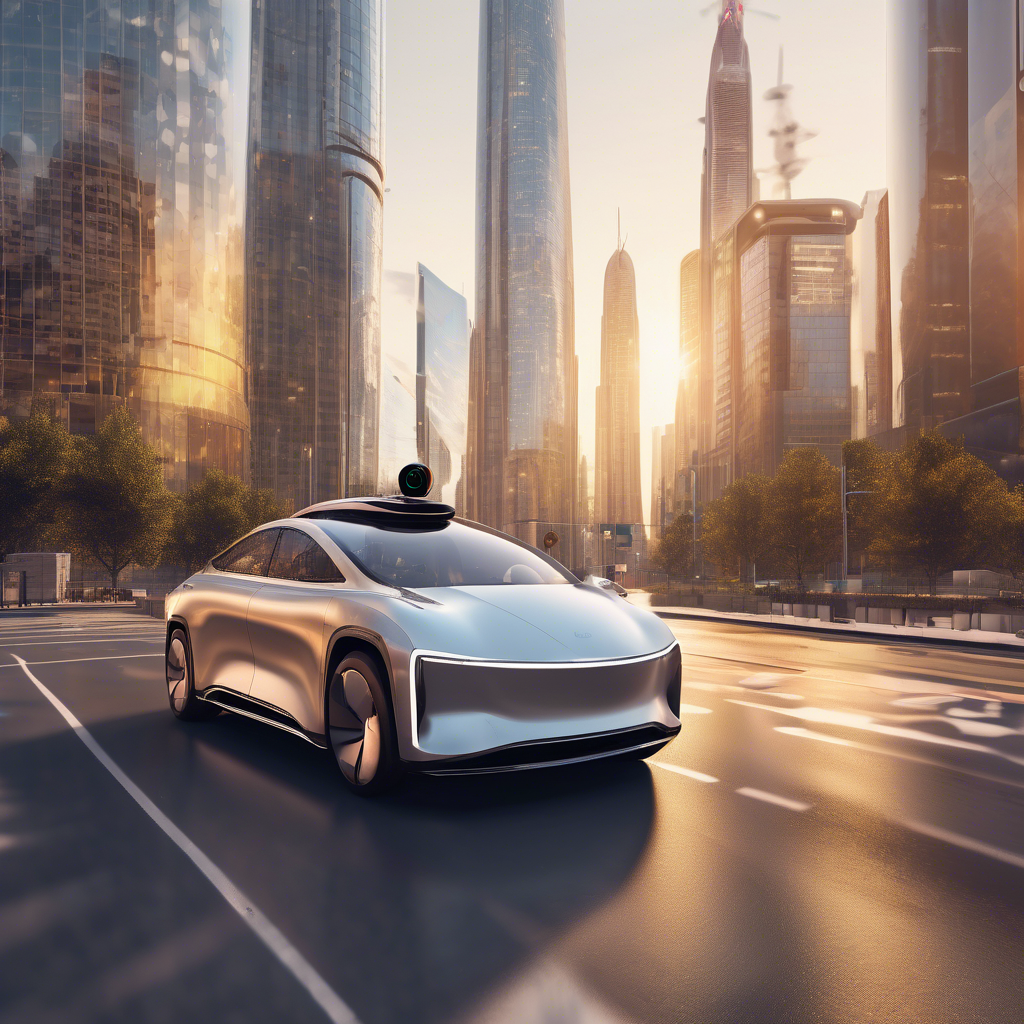
Artificial intelligence (AI) plays a crucial role in advancing autonomous vehicles by enabling self-driving cars to navigate complex environments and make independent decisions. Recent AI developments have enhanced safety and efficiency, bringing fully autonomous transportation closer to reality. AI utilizes advanced sensors and machine learning algorithms to detect obstacles, predict traffic patterns, and adapt to changing conditions, thereby reducing accidents caused by human error. Moreover, AI optimizes routes, conserves fuel, and improves traffic flow, benefiting the environment. It also facilitates communication between vehicles and infrastructure, fostering smarter transportation networks. Despite these benefits, challenges such as regulatory uncertainties, privacy issues, ethical concerns, and technical limitations in unpredictable scenarios persist. Addressing these challenges requires ongoing research, interdisciplinary collaboration, and transparent dialogue to establish robust AI systems, ethical guidelines, and effective regulations. Through combined efforts, AI’s full potential can be realized, making autonomous vehicles safe, reliable, and integral to the future of mobility.Artificial intelligence (AI) remains a cornerstone in the progression of autonomous vehicles, enabling self-driving cars to navigate complex environments and make critical decisions independently, fundamentally reshaping transportation systems. Recent years have seen significant strides in embedding AI within autonomous systems, enhancing both safety and efficiency, and bringing the reality of fully autonomous transport closer. However, challenges persist that need to be overcome to fully realize AI’s potential in this field. One key advantage of AI in autonomous vehicles is improved safety. Leveraging advanced sensors, machine learning, and real-time data processing, AI-driven cars can detect obstacles, predict traffic behavior, and react to changing road conditions faster and more accurately than many human drivers. This capability has helped reduce accidents caused by human error, the leading cause of traffic incidents globally. AI also continuously adapts to environmental changes such as adverse weather or fluctuating traffic density, boosting the reliability and robustness of these autonomous systems. Efficiency gains represent another major contribution of AI. Autonomous vehicles can optimize routing, lower fuel consumption, and enhance traffic flow through coordinated driving strategies, offering economic benefits and reducing transportation’s environmental impact. Moreover, AI-facilitated vehicle-to-vehicle and vehicle-to-infrastructure communication paves the way for smarter networks that adjust dynamically to real-time conditions, improving mobility and easing congestion. Nonetheless, AI adoption in autonomous vehicles faces significant hurdles. Regulatory frameworks are still evolving as governments worldwide seek to balance safety and innovation amid rapid technological advances, posing a major obstacle to widespread deployment.
Public acceptance is equally crucial, with trust hindered by concerns over data privacy, cybersecurity, and ethical dilemmas autonomous systems may encounter. Transparent communication about capabilities, limitations, and safety protocols is vital to enhance consumer confidence. Technical challenges remain as well. Autonomous vehicles must manage a wide range of unpredictable scenarios—from complex urban environments to severe weather and sudden obstacles. Although AI has progressed substantially, achieving human-like perception, decision-making, and adaptability is still difficult. Continued developments in sensor technology, data analysis, and algorithm design are essential to address these limitations. Experts emphasize that ongoing interdisciplinary research and collaboration among car manufacturers, tech developers, policymakers, and academia are key to overcoming these obstacles. Such partnerships are critical for fostering innovation and establishing standards that ensure safety and interoperability. Efforts focusing on AI robustness, ethical frameworks, and regulatory models are fundamental to unlocking AI’s full potential in autonomous transportation. In sum, AI is central to autonomous vehicle evolution, revolutionizing transportation by enabling safer and more efficient independent operation. Despite major advancements, fully leveraging AI’s benefits requires addressing regulatory, societal, and technical challenges. Sustained research, cooperation, and public engagement are indispensable to realizing a future where autonomous vehicles are trusted, widespread elements of global mobility.
Watch video about
The Impact of Artificial Intelligence on Autonomous Vehicles: Safety, Efficiency, and Challenges
Try our premium solution and start getting clients — at no cost to you