
How AI and Machine Learning are Revolutionizing Manufacturing Efficiency and Quality
Brief news summary
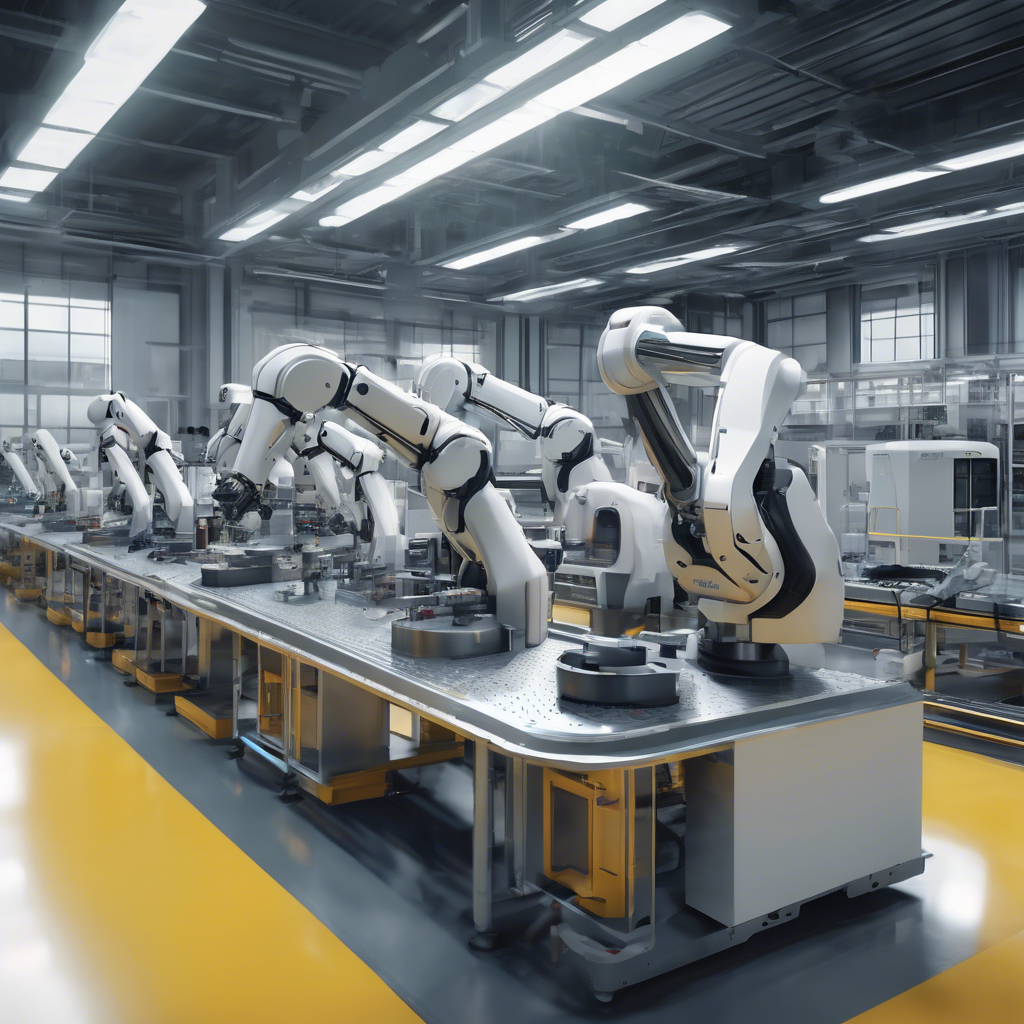
The integration of artificial intelligence (AI) and machine learning in manufacturing is transforming production by improving efficiency and driving innovation. AI analyzes vast sensor data from production lines to identify inefficiencies and enable targeted improvements. It detects complex patterns to optimize workflows, reduce waste, and lower operational costs. AI enhances quality control through accurate, real-time defect detection, minimizing recall risks and protecting brand reputation. Predictive maintenance powered by AI anticipates equipment failures, allowing timely repairs that reduce downtime and extend machinery lifespan. Additionally, AI supports greater customization and adaptability to changing production demands. Despite challenges like high costs, the need for skilled labor, and data security issues, AI significantly boosts productivity, cuts expenses, and improves product quality in manufacturing. This transformative influence is expected to grow substantially in the near future.The integration of artificial intelligence (AI) and machine learning technologies into the manufacturing sector is fundamentally transforming production processes, heralding a new era marked by heightened efficiency and innovation. Globally, manufacturers are increasingly utilizing these advanced technologies to analyze the massive amounts of data generated by their production lines. This enables AI systems to detect inefficiencies that traditional methods might overlook, facilitating targeted improvements that significantly boost productivity. A major benefit of employing AI in manufacturing lies in its capacity to process and interpret complex data patterns. Production lines are generally outfitted with numerous sensors and monitoring devices that continuously gather data on variables such as machine performance, product quality, and environmental conditions. Machine learning algorithms sift through this data to uncover hidden insights, allowing manufacturers to identify bottlenecks, reduce waste, and optimize workflows. This data-driven methodology ensures resources are used more efficiently, ultimately lowering operational costs. Furthermore, AI is improving quality control processes by offering real-time inspection capabilities. Traditional quality control often relies on manual inspections, which can be time-consuming and subject to human error. Conversely, AI-powered vision systems detect defects or deviations with remarkable accuracy, ensuring that only products meeting rigorous quality standards move forward in the supply chain. This enhancement in quality assurance not only safeguards brand reputation but also reduces the risk of costly recalls or rework. Predictive maintenance represents another critical domain where AI and machine learning have a significant impact.
Rather than depending on fixed maintenance schedules or reactive repairs after equipment failure, AI systems forecast machinery breakdowns by analyzing both historical and real-time data. This predictive ability allows manufacturers to carry out maintenance proactively, minimizing downtime and extending machinery lifespan. As a result, operations run more smoothly with fewer disruptions, leading to sustained productivity. The broad adoption of AI in manufacturing also unlocks new opportunities for customization and flexibility. Intelligent systems can rapidly adapt to changing production demands, enabling the manufacture of a wide variety of products without extensive retooling or delays. This agility is especially valuable in today’s fast-paced markets where consumer preferences shift quickly. Despite these compelling advantages, integrating AI into manufacturing processes poses challenges, including the need for significant investments in technological infrastructure, the requirement for skilled personnel capable of managing and interpreting AI outputs, and concerns regarding data security and privacy. Organizations must address these factors strategically to fully realize AI’s potential while mitigating associated risks. In conclusion, artificial intelligence and machine learning are reshaping the manufacturing landscape by optimizing production, enhancing quality control, and enabling predictive maintenance. Through intelligent data analysis and automated decision-making, these technologies drive greater efficiency, cost savings, and improved product quality. As AI continues to advance and mature, its role in manufacturing is poised to expand further, fueling innovation and competitiveness in the industry for the foreseeable future.
Watch video about
How AI and Machine Learning are Revolutionizing Manufacturing Efficiency and Quality
Try our premium solution and start getting clients — at no cost to you

I'm your Content Creator.
Let’s make a post or video and publish it on any social media — ready?

Content Maker

Last news
The Best for your Business
Hot news

15 Ways Sales Has Changed This Year in the Age of…
Over the last 18 months, Team SaaStr has immersed itself in AI and sales, with a major acceleration starting June 2025.

OpenAI's GPT-5: What We Know So Far
OpenAI is gearing up to launch GPT-5, the next major advancement in its series of large language models, with the release expected in early 2026.
AI in SEO: Transforming Content Creation and Opti…
Artificial intelligence (AI) is swiftly reshaping the field of content creation and optimization within search engine optimization (SEO).

AI Video Conferencing Solutions Improve Remote Wo…
The shift to remote work has highlighted the crucial need for effective communication tools, leading to the rise of AI-powered video conferencing solutions that enable seamless collaboration across distances.

AI In Medicine Market Size, Share, Growth | CAGR …
Overview The Global AI in Medicine Market is forecasted to reach approximately USD 156

Google's Danny Sullivan & John Mueller On SEO For…
John Mueller from Google hosted Danny Sullivan, also from Google, on the Search Off the Record podcast to discuss "Thoughts on SEO & SEO for AI

Lexus takes generative AI for a spin in new holid…
Dive Brief: Lexus has launched a holiday marketing campaign created using generative artificial intelligence, according to a press release
AI Company
Launch your AI-powered team to automate Marketing, Sales & Growth

and get clients on autopilot — from social media and search engines. No ads needed
Begin getting your first leads today

Your News is ready
Your article is ready

Lorem ipsum dolor sit amet consectetur adipisicing elit. Fuga dolor minus maiores. Aut vero expedita dicta, dolorem odit excepturi odio doloremque voluptatem repellat aliquam? Dolores nemo eum id pariatur! Nobis!
Generating video takes longer than text.







