Revolutionizing Security: AI Integration in Video Surveillance Systems
Brief news summary
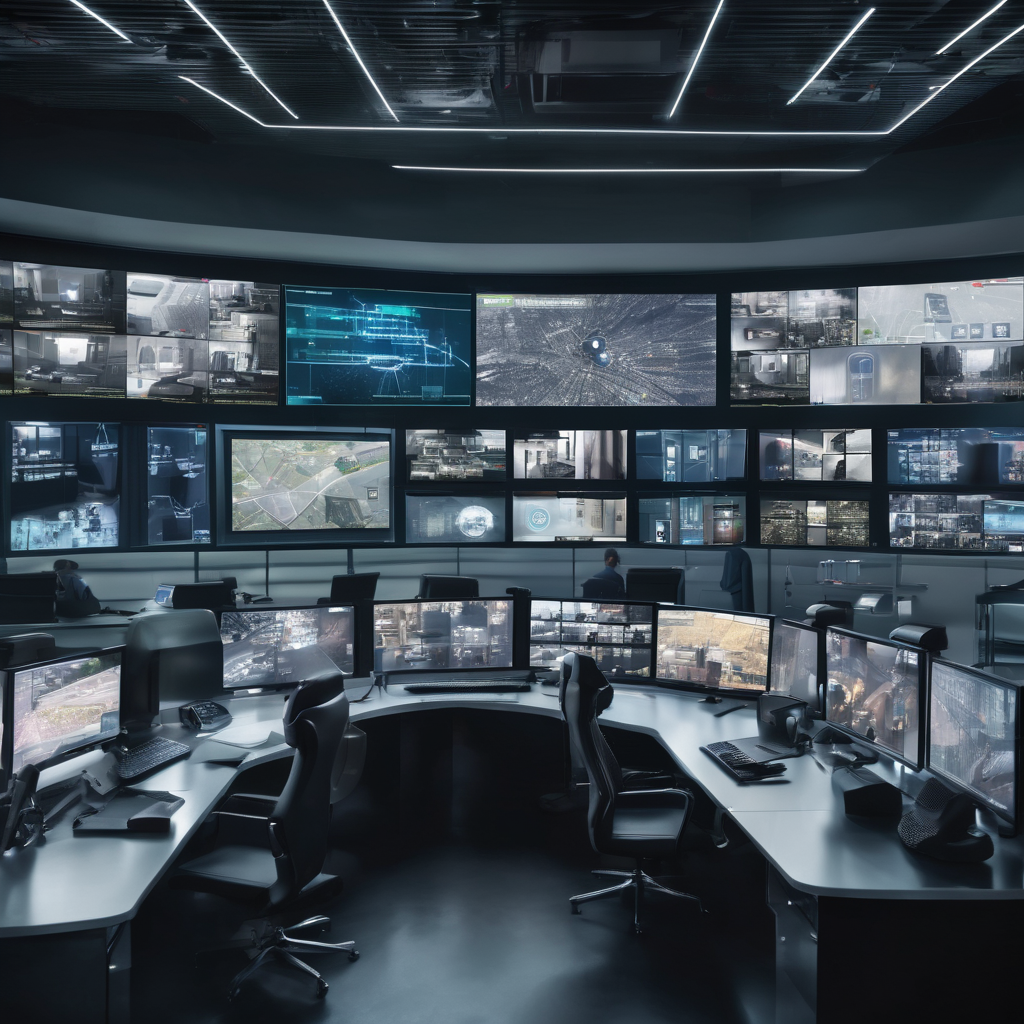
The integration of Artificial Intelligence (AI) into video surveillance is revolutionizing security by significantly improving monitoring accuracy and efficiency. Traditional surveillance relies heavily on human operators who are susceptible to fatigue and errors, whereas AI employs machine learning and computer vision to analyze live video feeds in real time. This enables automatic detection of threats, anomalies, and suspicious activities, such as potential conflicts or unauthorized access, instantaneously. AI-driven systems enhance response times by promptly alerting authorities and improve capabilities in facial recognition, intrusion detection, object tracking, and behavioral analysis. By automating routine monitoring tasks, AI allows security personnel to concentrate on critical decisions while optimizing resource allocation and reducing operational costs. Nevertheless, the deployment of AI in surveillance raises important privacy and ethical issues, necessitating strict regulations and transparency to preserve public trust. Looking ahead, AI is poised to transition security practices from reactive monitoring to predictive analytics, marking a substantial advancement toward smarter, more effective, and ethically responsible surveillance technologies.The integration of Artificial Intelligence (AI) into video surveillance systems is ushering in a new era of security improvements that greatly enhance the effectiveness and efficiency of monitoring solutions. As technology advances, AI algorithms have become increasingly adept at analyzing live video feeds in real time, transforming conventional security frameworks across multiple sectors. Traditionally, video surveillance systems depended heavily on human operators to watch footage and detect suspicious activities. This approach faced challenges such as human error, fatigue, and the difficulty of simultaneously monitoring multiple areas thoroughly. The emergence of AI technologies now allows these systems to automatically and accurately identify potential threats and anomalies without constant human supervision. AI-driven video surveillance leverages advanced machine learning techniques and computer vision to process and interpret vast visual data sets. These algorithms, trained on diverse datasets, can recognize patterns, detect unusual behaviors, and distinguish between normal and suspicious activities with impressive accuracy. For example, AI can tell apart a peaceful crowd from a developing conflict or instantly flag unauthorized access in restricted areas. The real-time analytical capability of AI boosts the responsiveness of security teams. Upon detecting a potential threat, the system can immediately notify relevant authorities or operators, reducing reaction time and possibly preventing incidents from escalating. This proactive security approach ensures timely and effective interventions, significantly improving safety. Furthermore, AI applications in video surveillance go beyond threat detection. These systems perform functions like facial recognition, intrusion detection, object tracking, and behavioral analysis. In public venues such as airports, shopping centers, and transit hubs, AI surveillance aids in crowd control and crime prevention.
For private properties, it offers homeowners and businesses peace of mind through intelligent, continuous monitoring. AI integration also paves the way for better resource management. By automating routine monitoring duties, security personnel can concentrate on critical decision-making and strategic efforts, rather than being overwhelmed by constant observation. This shift not only enhances operational efficiency but can also result in cost savings in managing security. Despite these benefits, implementing AI-based video surveillance raises important privacy and ethical concerns. Ensuring compliance with legal standards and respecting individual privacy rights is essential. Organizations must establish clear policies and maintain transparency to uphold public trust while utilizing AI capabilities. Looking ahead, ongoing AI advancements are expected to further refine surveillance technologies. Developments in deep learning and neural networks promise more sophisticated analyses, including predictive features that may forecast events based on behavioral patterns. Such innovations could revolutionize security by shifting from reactive to predictive and preventive strategies. In summary, combining AI technology with video surveillance marks a major advancement in security management. By enabling real-time, precise threat detection and enabling faster responses, AI enhances safety and strengthens security in a wide range of settings. While carefully addressing ethical issues, this technological transformation holds tremendous potential for the future of global security solutions.
Watch video about
Revolutionizing Security: AI Integration in Video Surveillance Systems
Try our premium solution and start getting clients — at no cost to you