
The Rising Importance of Skilled Trades in the Age of AI Automation
Brief news summary
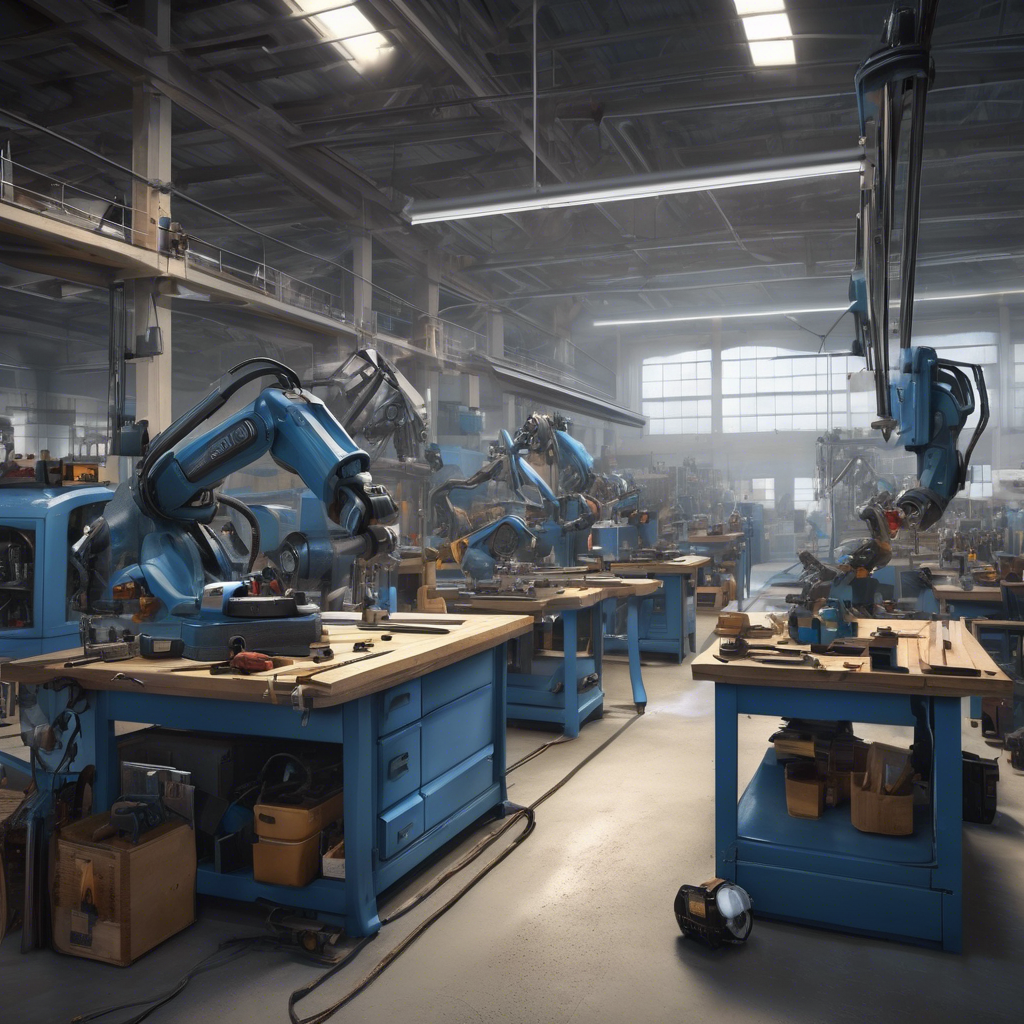
As AI automates many white-collar jobs, demand for skilled trades such as plumbing, welding, and electrical work is rising, as these roles require physical presence and complex manual skills less prone to automation. While AI reduces costs in clerical positions, it creates shortages in trades essential for installing and maintaining AI infrastructure, like data centers, where human expertise remains vital. Public figures like Mike Rowe stress that decades of focus on coding have overshadowed trades, now in critical short supply, with U.S. factories missing hundreds of thousands of workers monthly. Addressing this gap requires national strategies to train youth and retrain mid-career workers. Growing demand and better wages make trade careers more appealing, signaling an economic shift where AI and human craftsmanship coexist. The future workforce will blend AI efficiency with resilient manual professions, necessitating adaptive education and support to sustain growth in an AI-driven world.As artificial intelligence (AI) continues to disrupt various industries, white-collar professions are undergoing significant changes. Millions of office jobs are expected to be replaced by AI technologies, creating an evolving workforce ecosystem where some roles become automated, and others increase in importance. Amid this transition, skilled trades—traditionally seen as blue-collar jobs—are gaining renewed value and demand. Trades like plumbing, welding, and electrical work remain largely immune to AI replacement due to their need for physical presence, hands-on expertise, and complex manual skills. This rising focus on trades is fueled by corporations leveraging AI’s efficiencies to cut labor costs in administrative and clerical fields. Yet, this economic shift is simultaneously generating a workforce gap for positions requiring skilled human involvement. Skilled trades are especially vital in the installation, maintenance, and operation of AI infrastructure itself, including key elements like data centers. The physical upkeep and troubleshooting of machinery and hardware cannot currently be replicated by AI, reinforcing the importance of these trades within the advancing technological landscape. Public figures like Mike Rowe have highlighted this paradigm change. Rowe notes that the societal emphasis on coding and tech literacy over recent decades has inadvertently marginalized skilled trades careers. As AI progresses, many coding-centric jobs face automation risks while blue-collar trade roles continue to suffer labor shortages amid rising demand.
For instance, U. S. factories experience a monthly shortfall of approximately 450, 000 workers, highlighting the pressing need for expanded training and recruitment in skilled trades. Tackling this shortage requires a broad, nationwide approach that goes beyond youth education to also prioritize retraining mid-career workers. Programs designed to arm employees with practical skills in welding, plumbing, electrical work, and related trades are crucial for meeting 21st-century economic demands. Such efforts will help sustain essential infrastructure and support sectors that AI cannot entirely replace. Furthermore, career opportunities in skilled trades are becoming more appealing as demand surges and wages potentially rise in response to labor scarcity. This revival signals a broader economic realignment where technology and human expertise coexist. While AI revolutionizes many facets of work and everyday life, it simultaneously highlights the irreplaceable value of human skill in numerous blue-collar professions. The future of work is likely to be defined by a synergy between AI-driven efficiencies in some areas and resilient, hands-on professions that preserve human craftsmanship’s vital role in society. As industries continue to evolve, workers and policymakers must acknowledge and adapt to these changes by promoting education, training, and support systems that embrace the ongoing importance of skilled trades in the tech age. This dual strategy will ensure a strong, diverse workforce capable of sustaining economic growth and societal well-being in an AI-powered future.
Watch video about
The Rising Importance of Skilled Trades in the Age of AI Automation
Try our premium solution and start getting clients — at no cost to you

I'm your Content Creator.
Let’s make a post or video and publish it on any social media — ready?

Content Maker

Last news
The Best for your Business
Hot news

15 Ways Sales Has Changed This Year in the Age of…
Over the last 18 months, Team SaaStr has immersed itself in AI and sales, with a major acceleration starting June 2025.

OpenAI's GPT-5: What We Know So Far
OpenAI is gearing up to launch GPT-5, the next major advancement in its series of large language models, with the release expected in early 2026.
AI in SEO: Transforming Content Creation and Opti…
Artificial intelligence (AI) is swiftly reshaping the field of content creation and optimization within search engine optimization (SEO).

AI Video Conferencing Solutions Improve Remote Wo…
The shift to remote work has highlighted the crucial need for effective communication tools, leading to the rise of AI-powered video conferencing solutions that enable seamless collaboration across distances.

AI In Medicine Market Size, Share, Growth | CAGR …
Overview The Global AI in Medicine Market is forecasted to reach approximately USD 156

Google's Danny Sullivan & John Mueller On SEO For…
John Mueller from Google hosted Danny Sullivan, also from Google, on the Search Off the Record podcast to discuss "Thoughts on SEO & SEO for AI
Lexus takes generative AI for a spin in new holid…
Dive Brief: Lexus has launched a holiday marketing campaign created using generative artificial intelligence, according to a press release
AI Company
Launch your AI-powered team to automate Marketing, Sales & Growth

and get clients on autopilot — from social media and search engines. No ads needed
Begin getting your first leads today

Your News is ready
Your article is ready

Lorem ipsum dolor sit amet consectetur adipisicing elit. Fuga dolor minus maiores. Aut vero expedita dicta, dolorem odit excepturi odio doloremque voluptatem repellat aliquam? Dolores nemo eum id pariatur! Nobis!
Generating video takes longer than text.







