
How Blockchain Technology is Revolutionizing the Gaming Industry
Brief news summary
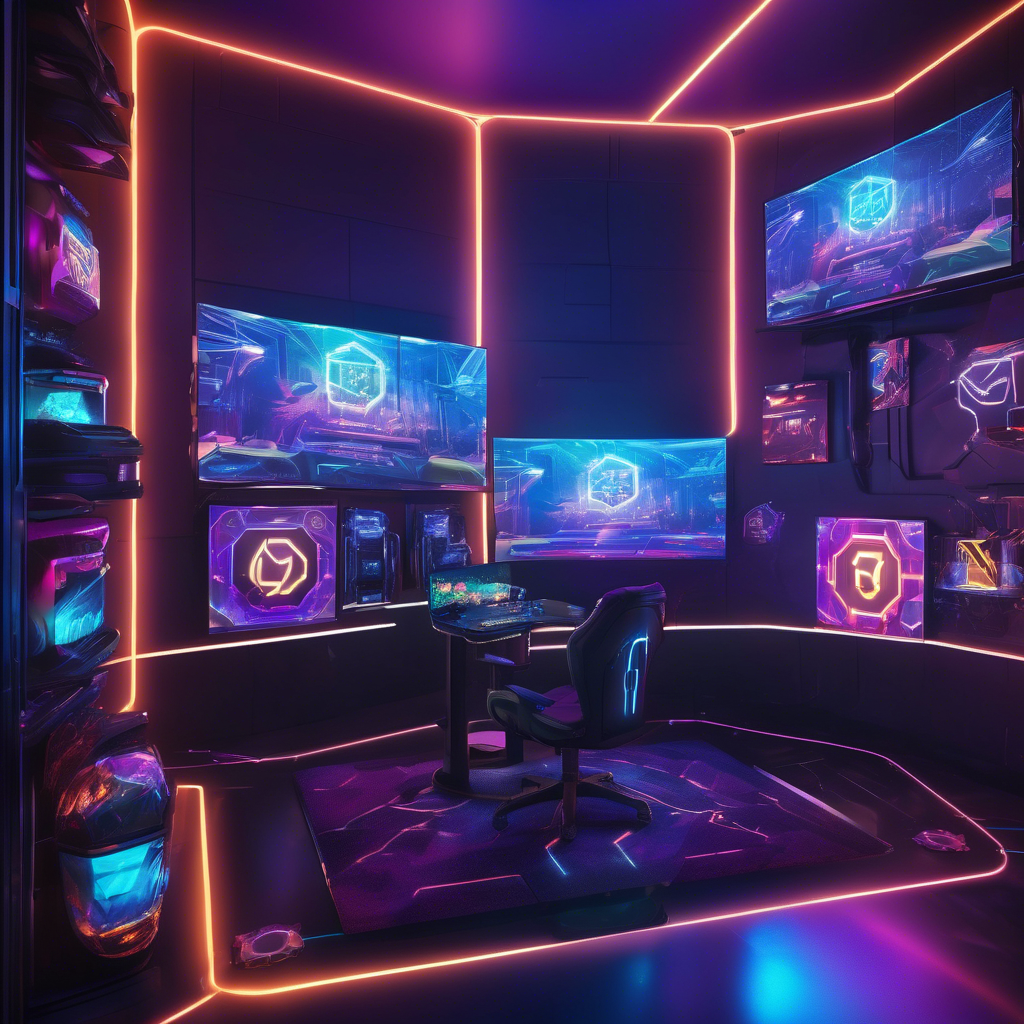
Blockchain technology is transforming the gaming industry by enabling true digital ownership and secure trading of in-game assets. Through tokenization, players gain verified ownership and scarcity of items, fostering a transparent in-game economy where buying, selling, and trading occur with confidence. A key innovation is cross-game interoperability, allowing assets like skins or weapons to be used across multiple games, enhancing their value and player engagement. However, challenges such as regulatory uncertainty and market volatility pose risks, as unclear legal frameworks and fluctuating token values affect adoption and stability. Despite these issues, developers and gamers are exploring blockchain’s potential to create new experiences and economic models. Ultimately, blockchain promises to reshape gaming by setting new ownership standards, boosting player autonomy, and building interconnected ecosystems, leading to more immersive and economically vibrant gaming worlds worldwide.Blockchain technology is transforming the gaming industry by opening new possibilities for digital asset ownership and trade, giving players unprecedented empowerment. By integrating blockchain, gamers can genuinely own in-game items, ensuring the security and authenticity of transactions. This is achieved through tokenizing in-game assets, which guarantees real ownership and introduces scarcity—two vital factors that were traditionally hard to enforce in digital environments. Consequently, a new economy is taking shape within games, where players can confidently and transparently buy, sell, and trade items. One of the most significant innovations blockchain brings to gaming is enabling cross-game interoperability. This allows digital assets—such as weapons, skins, or collectibles—to move beyond a single game's universe and be used across various platforms and titles. This interoperability greatly increases the value of these assets, boosting player engagement and investment by removing traditional boundaries between games. Despite the promising potential of blockchain-enhanced gaming, the industry confronts multiple challenges.
Regulatory uncertainty is a major issue, as governments and regulators worldwide are still determining how to classify and oversee digital assets and transactions within gaming contexts. This lack of clarity can slow innovation and adoption as developers and players deal with compliance risks. Market volatility is another obstacle. The value of tokenized in-game items can vary widely, influenced by speculative trading and broader cryptocurrency market fluctuations. Such instability can undermine player confidence and the viability of emerging gaming economies. Nevertheless, both developers and the gaming community are actively exploring blockchain’s possibilities. Game studios are experimenting with blockchain integration to offer unique experiences and economic models, while players increasingly seek the empowerment and opportunities that true digital ownership provides. Looking forward, blockchain technology holds the potential to fundamentally reshape the gaming landscape by setting new standards for asset ownership, enhancing player autonomy, and fostering a more interconnected ecosystem. With continued innovation and collaboration, these developments could create more immersive, equitable, and economically vibrant digital worlds for gamers globally.
Watch video about
How Blockchain Technology is Revolutionizing the Gaming Industry
Try our premium solution and start getting clients — at no cost to you

I'm your Content Creator.
Let’s make a post or video and publish it on any social media — ready?

Content Maker

Last news
The Best for your Business
Hot news

15 Ways Sales Has Changed This Year in the Age of…
Over the last 18 months, Team SaaStr has immersed itself in AI and sales, with a major acceleration starting June 2025.

OpenAI's GPT-5: What We Know So Far
OpenAI is gearing up to launch GPT-5, the next major advancement in its series of large language models, with the release expected in early 2026.

AI in SEO: Transforming Content Creation and Opti…
Artificial intelligence (AI) is swiftly reshaping the field of content creation and optimization within search engine optimization (SEO).

AI Video Conferencing Solutions Improve Remote Wo…
The shift to remote work has highlighted the crucial need for effective communication tools, leading to the rise of AI-powered video conferencing solutions that enable seamless collaboration across distances.

AI In Medicine Market Size, Share, Growth | CAGR …
Overview The Global AI in Medicine Market is forecasted to reach approximately USD 156

Google's Danny Sullivan & John Mueller On SEO For…
John Mueller from Google hosted Danny Sullivan, also from Google, on the Search Off the Record podcast to discuss "Thoughts on SEO & SEO for AI

Lexus takes generative AI for a spin in new holid…
Dive Brief: Lexus has launched a holiday marketing campaign created using generative artificial intelligence, according to a press release
AI Company
Launch your AI-powered team to automate Marketing, Sales & Growth

and get clients on autopilot — from social media and search engines. No ads needed
Begin getting your first leads today

Your News is ready
Your article is ready

Lorem ipsum dolor sit amet consectetur adipisicing elit. Fuga dolor minus maiores. Aut vero expedita dicta, dolorem odit excepturi odio doloremque voluptatem repellat aliquam? Dolores nemo eum id pariatur! Nobis!
Generating video takes longer than text.







