Chinese Researchers Advance AI in Air Combat, Eliminating Human Pilots' Tactical Edge
Brief news summary
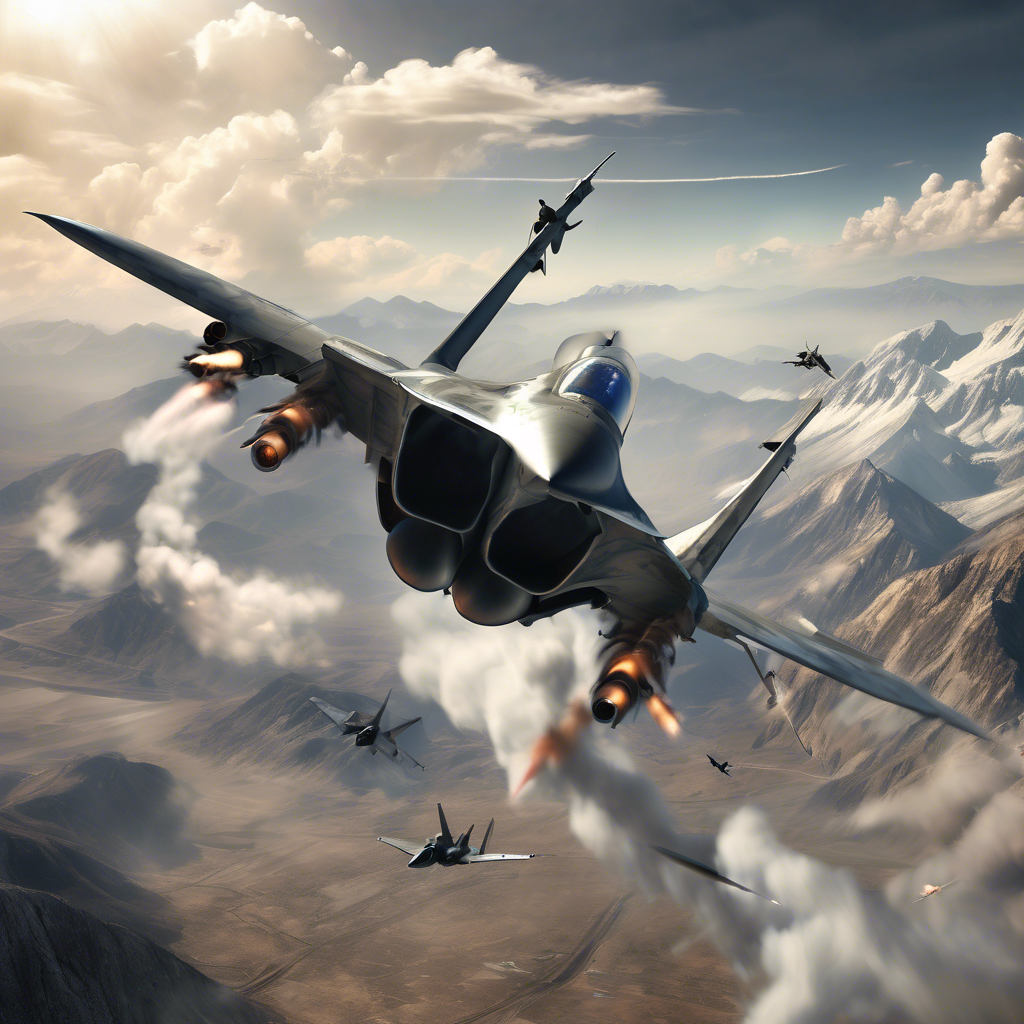
A groundbreaking study from Chinese researchers aims to revolutionize aerial combat by enhancing dogfighting predictability through artificial intelligence (AI). Featured in the December issue of the Journal of Gun Launch & Control, the research combines cutting-edge infrared imaging with AI predictive modeling to forecast aircraft movements based on subtle changes in wing and tail configurations. Led by Lin Zhiwei at the Northwest Institute of Mechanical & Electrical Engineering in Xianyang, the team asserts that their innovation could pose a significant challenge to agile fighter jets like the US F-15. This research tackles a major drawback of existing AI air combat systems, which often struggle with the unpredictable and nonlinear tactics employed by human pilots. Utilizing a modified YOLOv8 neural network, the researchers examined infrared images to detect minor adjustments in enemy aircraft control surfaces during flight. If successful, this technology could reshape air combat dynamics, potentially providing AI systems with a substantial advantage over expert human pilots.The primary advantage that combat pilots had over artificial intelligence (AI) was their unpredictability.
However, a recent study threatens this advantage. Reading Time: 2 minutes Why you can trust SCMP. Stephen Chen in Beijing Published: 10:00 AM, March 12, 2025 Updated: 11:33 AM, March 12, 2025 In a groundbreaking development poised to transform the landscape of air combat, Chinese researchers claim to have eliminated humanity’s last tactical edge over AI in dogfights: the ability to outmaneuver algorithms through unpredictable, high-stakes aerial maneuvers. Described in a study released late last year, the technique integrates advanced infrared imaging with AI-powered predictive modeling to forecast an opponent's actions by detecting subtle movements in their wings and tail. This advancement could render even the most nimble fighter jets, such as the US F-15, nearly powerless, according to the team at the Northwest Institute of Mechanical & Electrical Engineering in Xiangyang, which is a vital research division of Norinco, China's largest arms manufacturer. Published in the December edition of the Journal of Gun Launch & Control, the study tackles a significant shortcoming of current AI air combat systems: their dependency on trajectory-based predictions, which often fail to accommodate sudden, non-linear maneuvers by human pilots. Led by senior engineer Lin Zhiwei, the researchers overcame this limitation by concentrating on the physical mechanics of the adversary's aircraft. Employing a customized YOLOv8 neural network, their system evaluates infrared images to identify minute deformations in an opponent’s control surfaces—such as the F-15’s 1. 5-meter (five-foot) rudder and two-meter (6. 5-foot) elevator—while in flight.
Watch video about
Chinese Researchers Advance AI in Air Combat, Eliminating Human Pilots' Tactical Edge
Try our premium solution and start getting clients — at no cost to you