
DeepSeek's AI Model Controversy: Rivaling OpenAI Amid Accusations

Brief news summary
Chinese startup DeepSeek has launched an AI model intended to compete with Silicon Valley innovations, stirring controversy in the tech industry. OpenAI, the creator of ChatGPT, has accused DeepSeek of potentially using proprietary data without permission, prompting an ongoing investigation into whether DeepSeek utilized "distillation" techniques that may violate OpenAI's terms of service. This situation has attracted the attention of U.S. officials, including Commerce Secretary nominee Howard Lutnick, who expressed concerns about possible intellectual property violations. While DeepSeek admits to using some open-source data, OpenAI's accusations highlight significant issues regarding proprietary technology rights in AI, coinciding with OpenAI's own legal battles over the use of copyrighted training materials. Expert opinions on the validity of OpenAI's claims vary, causing fluctuations in U.S. tech stock prices. Former President Donald Trump's endorsement of DeepSeek adds a controversial angle to the debate, stirring discussions on the implications for the future of AI technologies and their ability to broaden access to advanced tools.Chinese startup DeepSeek made waves this month by launching an AI model that appeared to rival those from Silicon Valley, utilizing fewer resources and creative workarounds to U. S. chip restrictions. Initially hailed as an engineering triumph, the narrative has shifted with OpenAI alleging that DeepSeek may have improperly used its proprietary data for training its AI. OpenAI is investigating whether DeepSeek mimicked its model outputs in a process called distillation, which, although common in AI development, violates OpenAI’s terms of service. Support for OpenAI's claims has surfaced from U. S. officials. Commerce secretary nominee Howard Lutnick accused DeepSeek of misusing U. S. technology, while David Sacks from the White House acknowledged possible intellectual property theft.
This controversy highlights a significant question about the control companies should have over their AI when derived from data sourced from others. The situation is particularly ironic for OpenAI, which faces lawsuits for allegedly using copyrighted material for training its AI and is criticized for its own data practices. Despite DeepSeek’s acknowledgment of using some open-source models, OpenAI claims that it improperly utilized closed-source models, though evidence of wrongdoing remains unpresented. Proving improper distillation could be challenging for OpenAI, as any claims might hinge on disclosing its own model training details. Legal experts are skeptical about the viability of OpenAI's case against DeepSeek, citing the difficulties in enforcing terms of service across borders. The financial implications of DeepSeek's advancements have caused fluctuations in U. S. tech stocks, prompting conversations about potential government actions, such as tariffs, to curb technology theft. Contradicting these concerns, President Trump praised DeepSeek's low-cost model as a positive development for AI, suggesting it might encourage competitiveness in the industry. Overall, if DeepSeek’s model proves sustainable, it could reshape the market dynamics, opening up opportunities for smaller teams to innovate in the generative AI field.
Watch video about
DeepSeek's AI Model Controversy: Rivaling OpenAI Amid Accusations
Try our premium solution and start getting clients — at no cost to you

I'm your Content Creator.
Let’s make a post or video and publish it on any social media — ready?

Content Maker

Last news
The Best for your Business
Hot news

Adobe Acquires Semrush to Enhance AI Marketing An…
Adobe has taken a major step in the digital marketing and analytics arena by acquiring Semrush for $1.9 billion in cash.

AI Video Conferencing Tools Gain Popularity Amid …
As remote work continues to expand globally, companies are increasingly adopting AI-powered video conferencing tools to enhance communication and collaboration among distributed teams.

The Future of SEO: Integrating AI for Enhanced Se…
The landscape of search engine optimization (SEO) is currently undergoing a profound transformation due to the integration of artificial intelligence (AI).

OpenAI's Sora Model Achieves Milestone in Text-to…
OpenAI has achieved a significant breakthrough with its Sora model, a cutting-edge advancement in text-to-video generation that transforms textual descriptions directly into high-quality videos.
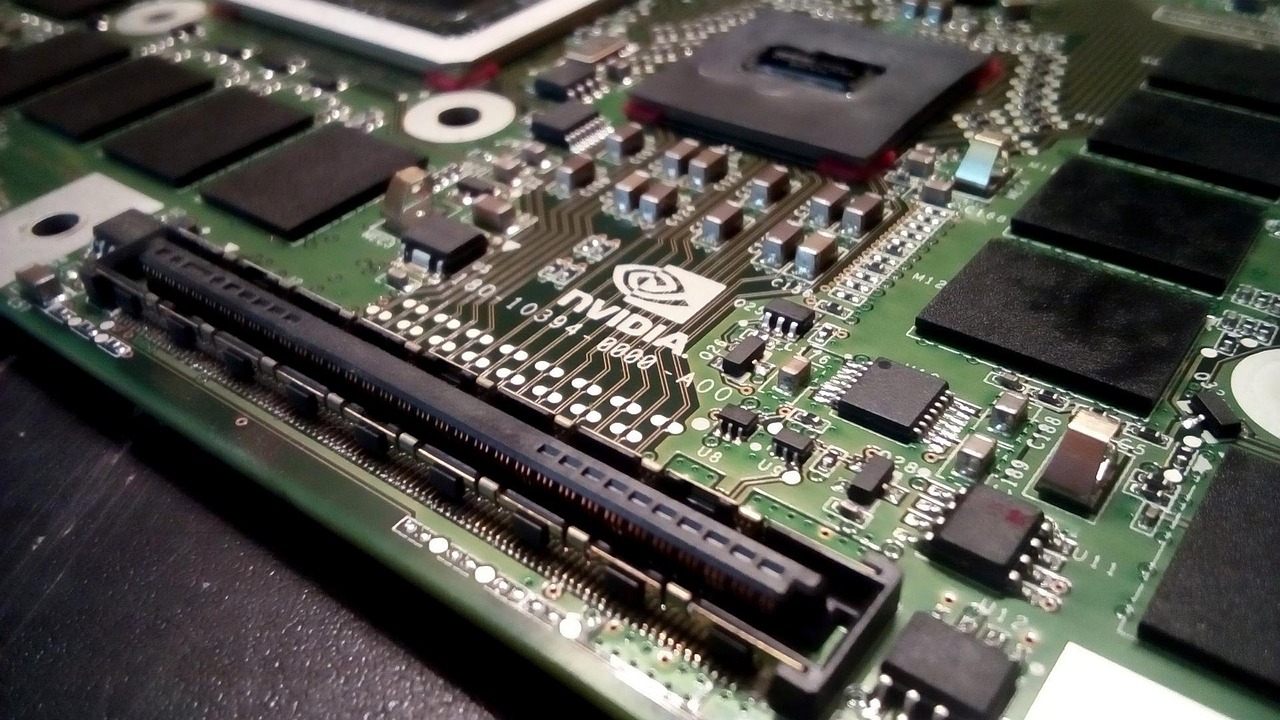
Nvidia AI chip sales to China stalled by US secur…
A necessary component of this site failed to load.

Generative Engine Optimization: A VLM and Agent F…
In the rapidly evolving realm of digital content and artificial intelligence, enhancing search visibility on visual platforms poses significant challenges.

Adobe Acquires Semrush to Enhance AI-Powered Mark…
Adobe Systems Inc., the global software giant known for its creative tools, has announced its acquisition of Semrush, a top provider of digital marketing analytics and SEO software.
AI Company
Launch your AI-powered team to automate Marketing, Sales & Growth

and get clients on autopilot — from social media and search engines. No ads needed
Begin getting your first leads today

Your News is ready
Your article is ready

Lorem ipsum dolor sit amet consectetur adipisicing elit. Fuga dolor minus maiores. Aut vero expedita dicta, dolorem odit excepturi odio doloremque voluptatem repellat aliquam? Dolores nemo eum id pariatur! Nobis!
Generating video takes longer than text.







