How Blockchain is Revolutionizing Global Trade Finance: Key Benefits and Future Outlook
Brief news summary
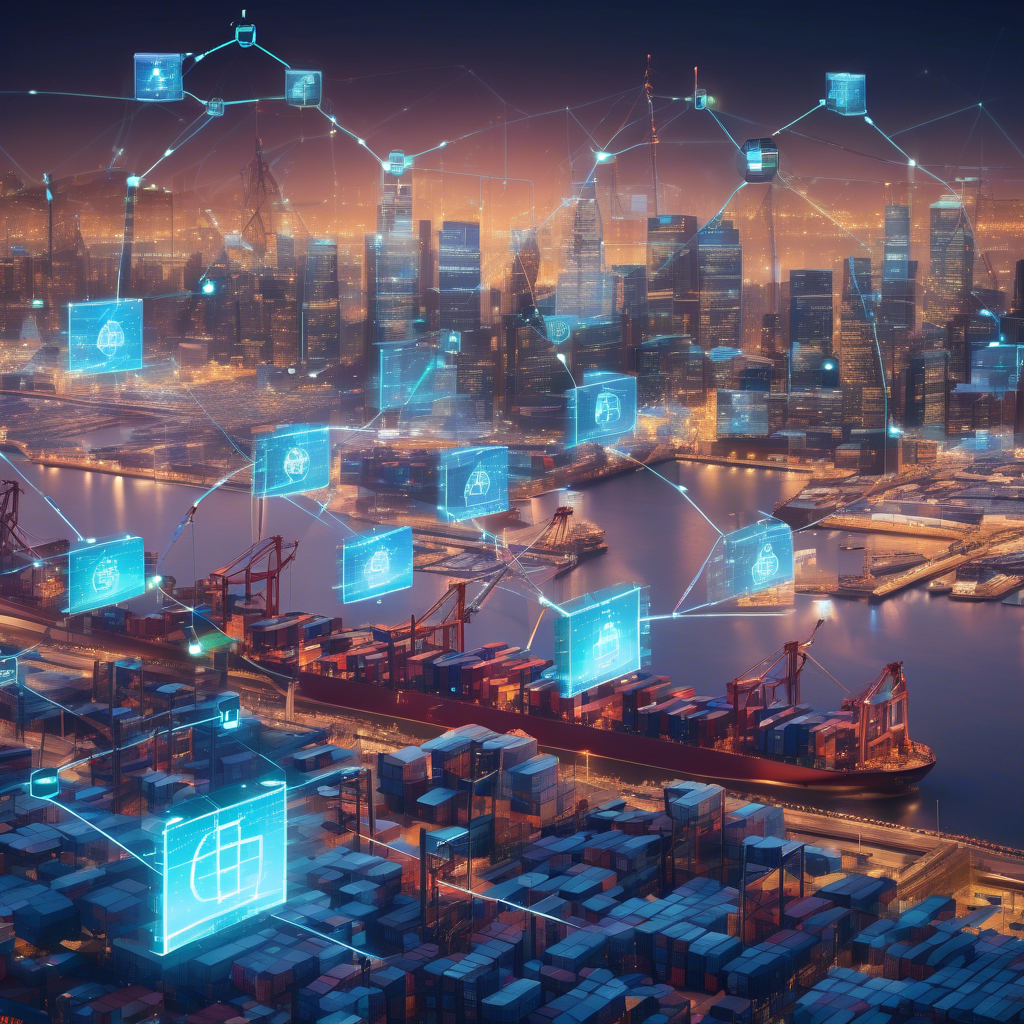
The global trade finance ecosystem struggles with inefficiencies, delays, and risks due to manual, paper-based processes and fragmented systems. Blockchain technology offers a transformative solution by digitizing and decentralizing trust, enhancing efficiency, security, and transparency. Through decentralized ledgers and smart contracts, blockchain automates transactions, provides immutable real-time data, reduces settlement times and errors, and prevents fraud common in traditional trade finance. It integrates with existing financial infrastructure and supports complex supply chains while simplifying compliance tasks like KYC and AML via secure, verified, time-stamped data sharing, reducing costs and bottlenecks. Improved end-to-end supply chain visibility enables better risk management through real-time credit assessments. Platforms such as Marco Polo, we.trade, and TradeLens demonstrate blockchain’s practical benefits in trade finance and logistics. Future advances combining blockchain with AI, IoT, and machine learning promise further optimization and smarter decision-making. Despite challenges in interoperability, regulation, and adoption, blockchain is set to revolutionize global trade finance by driving growth, resilience, and innovation.The global trade finance ecosystem has traditionally struggled with inefficiencies, risk exposure, and delays due to manual paperwork, siloed systems, and opaque processes. Recent digital transformation efforts have begun to alleviate these issues, yet blockchain technology emerges as a highly disruptive and promising innovation. For experts in international trade finance, blockchain’s key advantage lies in digitizing and decentralizing trust, boosting operational efficiency, security, and transparency across global trade networks. The Consegic Business Intelligence report estimates the blockchain technology market will soar from USD 26. 75 billion in 2024 to over USD 331. 71 billion by 2032, growing at a CAGR of 44. 5% from 2025 to 2032. **Redefining Trade Finance through Blockchain Integration** Traditional trade finance tools like letters of credit, bills of lading, and payment guarantees rely heavily on paper workflows, manual reconciliations, and intermediaries. These manual processes are slow and vulnerable to fraud, errors, and miscommunication. Blockchain offers a decentralized ledger where multiple parties share a single, immutable, real-time version of transactional data, removing the need for reconciliation and third-party validation. Smart contracts on blockchain automate conditional transactions—for example, automatically releasing payment upon IoT-confirmed goods delivery—cutting settlement times from weeks to hours and reducing friction. The immutable ledger protects against document tampering and fraud, critical challenges in cross-border trade. Moreover, blockchain’s compatibility with APIs and legacy ERP systems ensures smooth integration into existing financial and supply chain infrastructures, facilitating coordination among banks, customs, insurers, and freight forwarders across complex supply chains. **Enhancing Transparency, Compliance, and Risk Management** In international trade, regulatory compliance (KYC, AML, sanctions screening) demands extensive verification. Blockchain’s transparency streamlines these processes by providing authorized participants with verified, time-stamped data on a permissioned network.
This shared data layer reduces duplicated KYC/AML efforts among institutions and jurisdictions, cutting costs and timelines—especially crucial in high-risk regions facing inconsistent documentation and regulatory conflicts. Blockchain also improves trade risk management by offering end-to-end visibility of supply chains through tokenized asset tracking and decentralized identities. Institutions can trace goods from origin to delivery, enabling real-time risk assessment and predictive analytics that help price trade finance accurately while mitigating geopolitical, logistical, and counterparty risks. **Real-World Deployments and Future Outlook** Several blockchain consortia have proven digital trade finance’s viability. The Marco Polo network, built on R3’s Corda platform, links buyers, suppliers, and banks in a decentralized environment supporting receivables discounting, payments, and risk management. The we. trade platform has automated trade finance for European banks using smart contracts to streamline invoice financing and payments. Additionally, IBM and Maersk’s TradeLens optimizes maritime logistics and documentation, providing essential data infrastructure for informed financing decisions via real-time cargo tracking and document verification. Future synergy of blockchain with AI, machine learning, and IoT will enhance trade finance value further. AI can verify document integrity and detect anomalies, while IoT sensors supply trustworthy environmental and location data—both integrated on-chain to trigger smart contract events or credit decisions. However, widespread blockchain adoption faces challenges: interoperability across protocols, regulatory standardization, data privacy frameworks, governance trust, legal enforceability of smart contracts, and seamless integration with digital banking systems are essential for scalability and cross-border use. **Conclusion** Blockchain is transforming international trade finance by enabling unparalleled automation, transparency, and security. Serving as a secure single source of truth, it streamlines operations, reduces risk, and improves compliance. For industry professionals, blockchain is not merely a technical upgrade but a strategic driver of growth, resilience, and innovation in a complex global economy. As pilot projects evolve into large-scale deployments, blockchain’s role will be not only transformative but foundational to the future of international commerce.
Watch video about
How Blockchain is Revolutionizing Global Trade Finance: Key Benefits and Future Outlook
Try our premium solution and start getting clients — at no cost to you