
DeepMind's AlphaCode Revolutionizes AI-Driven Programming with Human-Level Coding Skills
Brief news summary
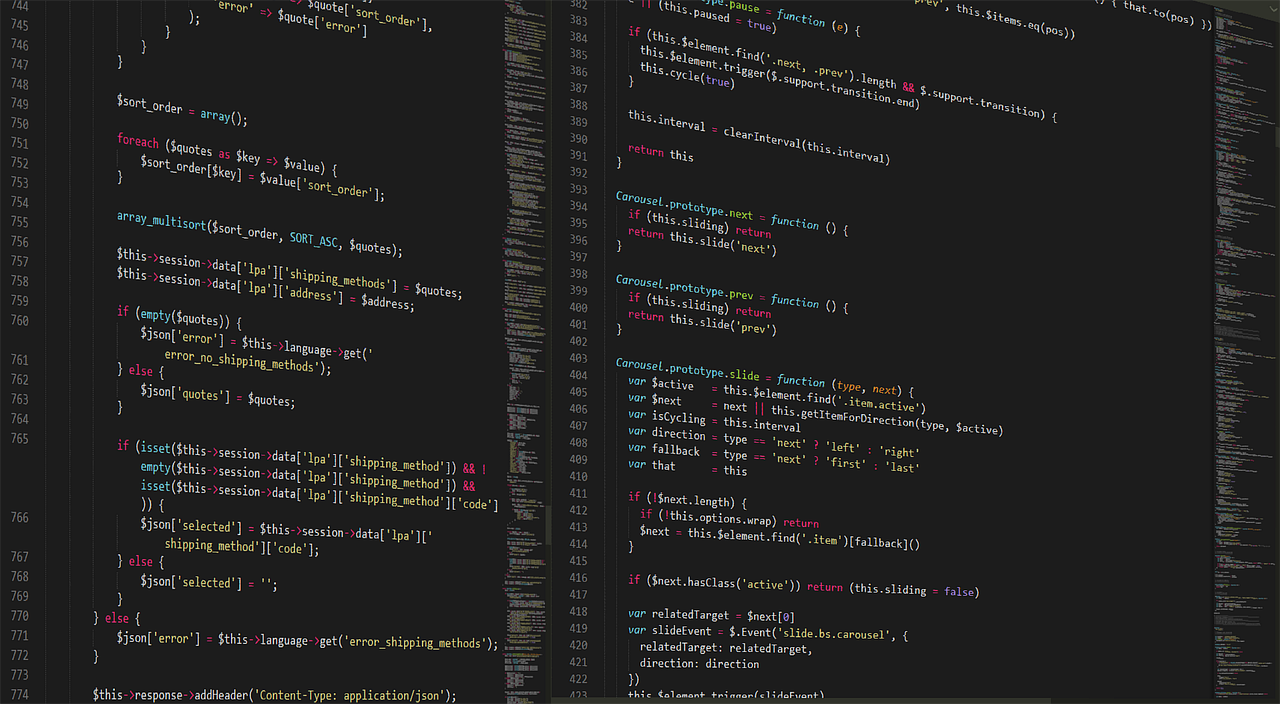
DeepMind's AlphaCode is an advanced AI system capable of writing computer code at a level comparable to skilled human programmers, representing a major breakthrough in AI-driven software development. It comprehends natural language problem descriptions and produces syntactically correct, logically sound code solutions. Trained on vast datasets of code and programming challenges, AlphaCode outperforms previous automated coding tools across a wide range of tasks. Its main goal is to boost developer productivity by assisting with code drafting, optimization, and independently tackling complex problems. Additionally, AlphaCode supports education by helping learners understand programming concepts and enables users with limited coding experience to create software through natural language instructions. While its capabilities are impressive, challenges remain in ensuring the reliability, security, and ethical use of the generated code. Overall, AlphaCode ushers in a new era of AI-human collaboration in programming, fostering innovation, efficiency, and greater access to coding worldwide.DeepMind, a leading artificial intelligence research firm, has developed an innovative system called AlphaCode, which demonstrates the impressive capability to write computer code comparable in quality and complexity to that of skilled human programmers. This breakthrough marks a major milestone at the crossroads of artificial intelligence and software engineering, underscoring the expanding potential of machine learning technologies to revolutionize multiple facets of the software development lifecycle. AlphaCode functions by using advanced machine learning algorithms to interpret problem statements expressed in natural language. After understanding these challenges, it generates corresponding code solutions that fulfill the specified requirements. The system not only produces syntactically accurate code but also ensures that the logic and functionality closely match human expectations and standards. This level of expertise is especially significant because coding involves complex reasoning, problem-solving skills, and creativity—qualities traditionally linked to human developers. AlphaCode’s development stems from the continuous advancement of deep learning models that have increasingly excelled in language-related tasks, including programming languages. By training on extensive datasets of existing code and problem-solving examples, AlphaCode has learned patterns and structures that enable it to effectively address new and varied coding problems. This method allows it to generalize from prior knowledge and apply it to novel situations, overcoming a longstanding challenge faced by automated coding systems. One of AlphaCode’s most compelling features is its potential to transform software development workflows.
Traditionally, coding tasks demand substantial time and human effort, involving understanding complex specifications, writing error-free code, and iterative debugging. With AlphaCode’s abilities, developers could see boosted productivity, as the system can help generate initial code drafts, suggest optimized solutions, or even autonomously resolve particular programming challenges. Moreover, AlphaCode could have a vital role in educational settings by assisting learners in grasping programming concepts through example solutions and explanations. It may also enhance accessibility by enabling people with limited coding experience to create software using natural language instructions. Despite these encouraging advances, incorporating AI systems like AlphaCode into real-world software development presents key considerations. Ensuring the reliability and security of AI-generated code is crucial due to potential risks of bugs or vulnerabilities. Additionally, addressing ethical implications and maintaining human oversight are essential for the responsible deployment of such technologies. AlphaCode’s achievements signal a new era in which artificial intelligence complements human expertise in computer programming. As this technology evolves, it is expected to drive innovations in software engineering, increase efficiency, and expand participation in coding activities across various fields. DeepMind’s work with AlphaCode exemplifies the transformative influence that cutting-edge AI research can have on fundamental technological practices.
Watch video about
DeepMind's AlphaCode Revolutionizes AI-Driven Programming with Human-Level Coding Skills
Try our premium solution and start getting clients — at no cost to you

I'm your Content Creator.
Let’s make a post or video and publish it on any social media — ready?

Content Maker

Last news
The Best for your Business
Hot news

Evaluating AI Personalization Engines: Avoiding O…
AI personalization engines have greatly simplified making marketing smarter and more relevant, yet many companies overuse them.

How SaaS Teams Are Using AI to Turn Articles into…
SaaS founders and marketing leaders recognize that consistently publishing high-quality articles does more than just drive traffic—it builds trust, nurtures leads, and fuels compound growth over time.

AI Video Surveillance Systems Improve Public Safe…
In recent months, an increasing number of cities have adopted advanced technology to improve public safety by deploying AI-powered video surveillance systems.

CoreWeave Shares Slide 3.1% as Insider Sales and …
As 2026 began, the AI infrastructure sector faced a sobering reality check.

SoftBank's $40 Billion Investment in OpenAI
SoftBank has finalized its substantial $40 billion investment in OpenAI, representing one of the largest technology investments from the private sector in recent times.

AI in Video Surveillance: Enhancing Security and …
The integration of artificial intelligence (AI) into video surveillance systems represents a major advancement in security and monitoring.

Tech war: China takes confident strides to develo…
On the last day of 2025, DeepSeek released a technical paper co-authored by founder and CEO Liang Wenfeng and 18 others, detailing "manifold-constrained hyper-connections," a general framework for scaling AI system training that proposed promising directions for foundational models’ evolution.
AI Company
Launch your AI-powered team to automate Marketing, Sales & Growth

and get clients on autopilot — from social media and search engines. No ads needed
Begin getting your first leads today

Your News is ready
Your article is ready

Lorem ipsum dolor sit amet consectetur adipisicing elit. Fuga dolor minus maiores. Aut vero expedita dicta, dolorem odit excepturi odio doloremque voluptatem repellat aliquam? Dolores nemo eum id pariatur! Nobis!
Generating video takes longer than text.







