Intel Unveils Advanced AI Chips for Smarter, Energy-Efficient Smart Devices
Brief news summary
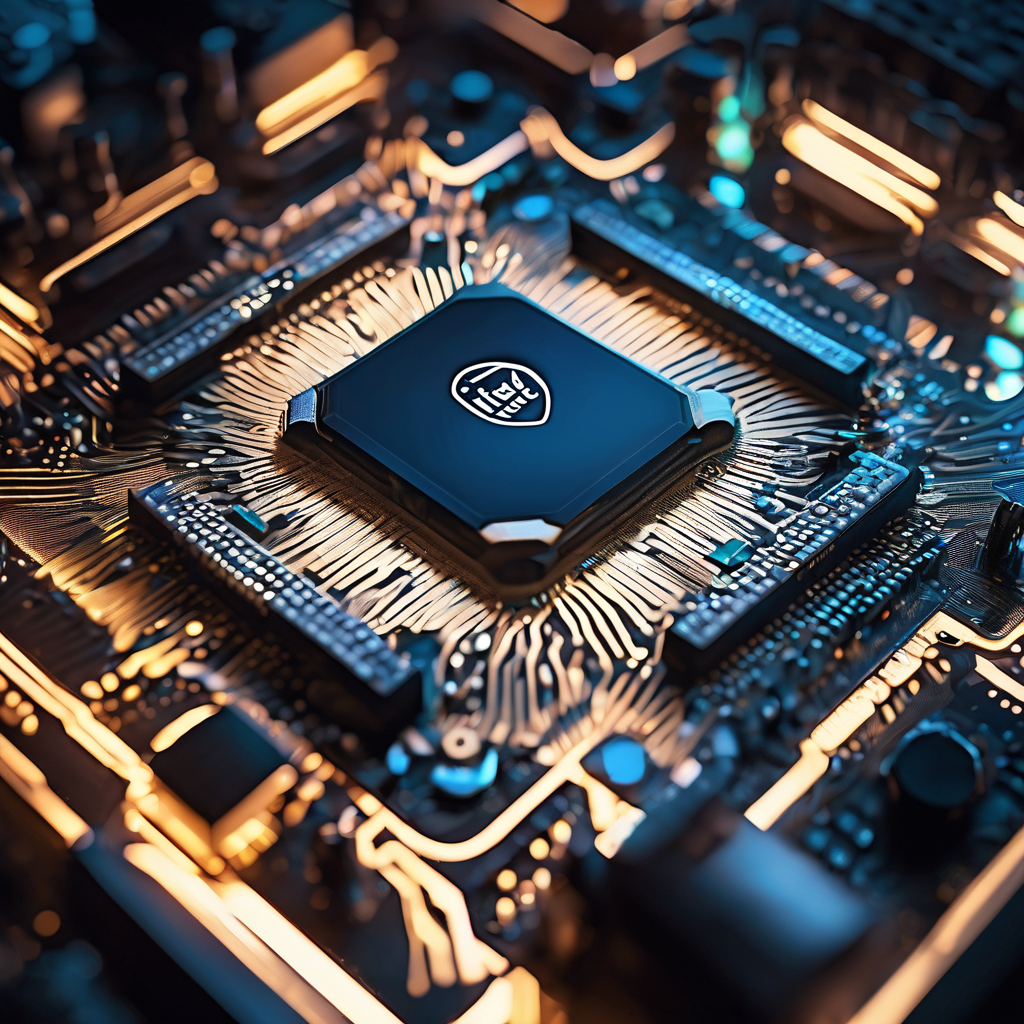
Intel has launched a new series of AI chips designed to revolutionize smart devices by delivering faster processing and greater energy efficiency. These chips integrate AI capabilities directly into hardware, allowing complex tasks to be executed locally rather than relying on cloud computing. This approach reduces latency, enhances data security, and enables rapid responses without continuous internet connectivity. Targeted at IoT devices, wearables, and connected technologies, Intel’s chips offer high performance with low power consumption, ideal for prolonged use in mobile and remote settings. For example, wearables can provide real-time health monitoring and instant feedback independently of cloud access. These versatile chips support various sectors including smart cities and autonomous systems by efficiently handling diverse workloads. Emphasizing edge computing, Intel’s technology processes data near its source, minimizing delays and bandwidth usage while improving privacy. This breakthrough enhances user experiences with smarter, safer devices and speeds up AI integration in healthcare, manufacturing, transportation, and more, marking a major advancement in AI hardware.Intel has launched a groundbreaking series of artificial intelligence (AI) chips that mark a major advancement in powering next-generation smart devices. Designed for faster processing and greater energy efficiency, these chips address critical needs in the rapidly growing Internet of Things (IoT), wearable technology, and other connected devices. Unlike traditional processors that depend heavily on cloud-based AI computations, Intel’s new chips embed AI directly into the hardware, enabling complex tasks to be processed locally. This reduces latency by eliminating constant communication with remote servers, resulting in faster response times, less reliance on cloud connectivity, and enhanced data security and user privacy. In IoT applications—such as smart home appliances, industrial sensors, healthcare monitors, and environmental trackers—where speed and energy use are crucial, Intel’s chips strike an optimal balance. Improved energy efficiency allows devices to run longer on limited power sources like batteries, vital for mobile and remote use. Wearable devices also benefit significantly; as they evolve from simple fitness trackers to advanced health monitors analyzing complex physiological data in real-time, these AI chips enable rapid, energy-efficient on-device processing, providing immediate feedback without continuous cloud dependence. Intel’s chips are designed to handle diverse workloads efficiently, combining advanced AI capabilities with power-conscious and high-speed processing. This versatility supports a wide range of smart technologies, including smart cities, autonomous systems, and consumer electronics, accelerating innovation and adoption across industries.
Intel’s focus on embedding AI into hardware mirrors a broader move toward edge computing—processing data near its source rather than relying on centralized cloud data centers—thereby reducing latency and bandwidth consumption. Such local processing enhances device autonomy and reliability. Additionally, local AI computation aligns with growing concerns about data privacy and security by minimizing the transmission of sensitive information over networks, reducing risks of breaches and offering both consumers and enterprises greater peace of mind. In sum, Intel’s new AI chip lineup is set to transform future smart devices by combining faster processing, better energy efficiency, and integrated AI. This enables smarter, more responsive, and secure technologies that function independently and efficiently. As these chips are adopted in various device categories, users will experience more reliable AI-driven features without compromising on power consumption or responsiveness. Looking forward, the impact of these AI chips may extend beyond individual devices to influence the larger artificial intelligence ecosystem. By enhancing edge computing capabilities, Intel’s technology could spur development of innovative AI solutions in healthcare, manufacturing, transportation, and other sectors, driving greater automation and intelligence. The introduction of these chips marks an exciting new phase in AI’s integration into everyday technology.
Watch video about
Intel Unveils Advanced AI Chips for Smarter, Energy-Efficient Smart Devices
Try our premium solution and start getting clients — at no cost to you