Lightmatter Unveils Energy-Efficient Photonic Chip to Accelerate AI Computations
Brief news summary
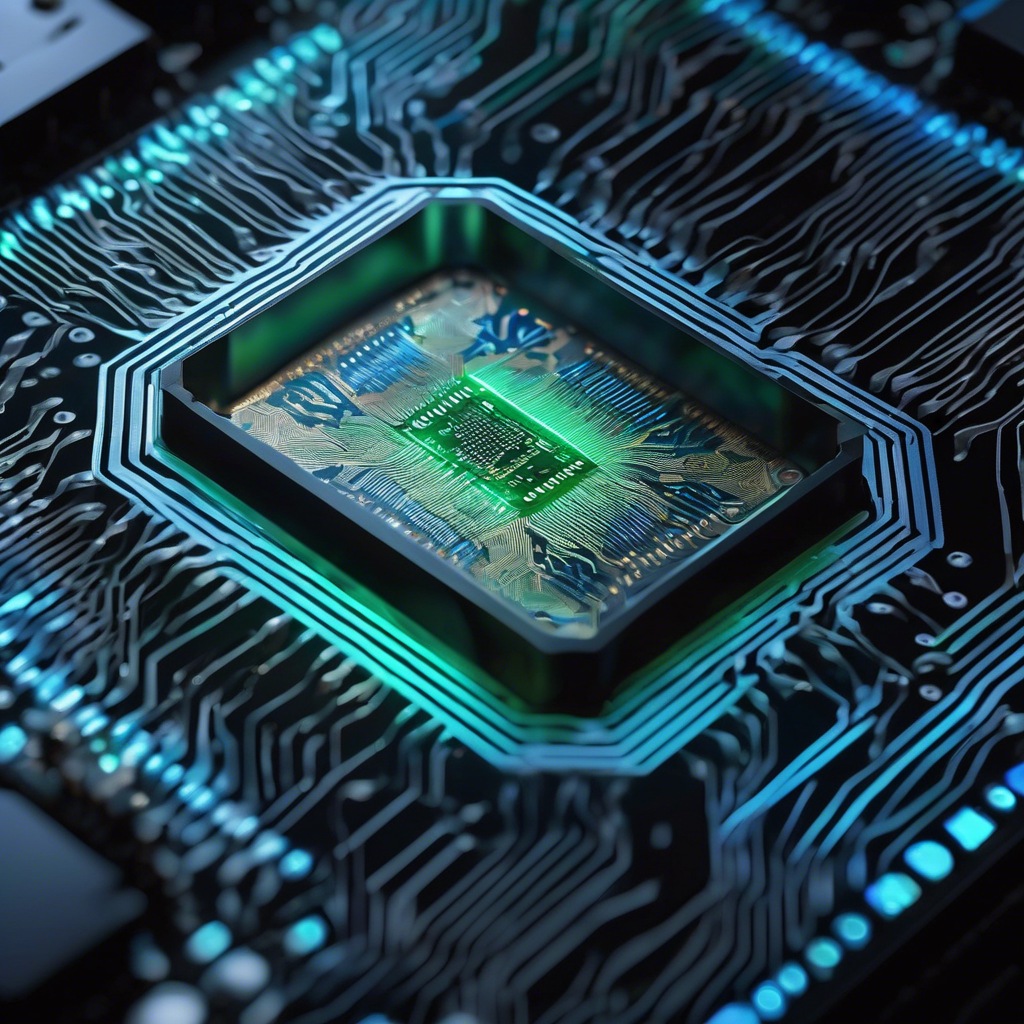
Lightmatter, a Silicon Valley startup, has created a photonic chip that uses light instead of electronic signals to accelerate AI computations. This innovative technology allows faster data processing with lower power consumption and less heat generation than traditional processors. By leveraging photons, the chip dramatically improves speed and energy efficiency, meeting the growing demands of AI applications like natural language processing, computer vision, and autonomous driving. It supports parallel processing at the speed of light, enhancing AI performance, reducing latency, and increasing responsiveness while significantly cutting energy use and carbon emissions in data centers. Despite challenges in integrating photonic chips with current software and manufacturing methods, Lightmatter is actively addressing these issues. This breakthrough exemplifies Silicon Valley’s commitment to scalable, sustainable AI hardware solutions that can benefit industries such as healthcare, finance, and transportation, making future AI workloads more manageable and efficient.Lightmatter, a Silicon Valley startup, has introduced a cutting-edge photonic chip designed to accelerate artificial intelligence (AI) computations without increasing power consumption, thus enhancing energy efficiency. This innovation marks a significant advancement in AI hardware, addressing the urgent demand for faster and more efficient computational solutions amid growing AI application requirements. Unlike traditional electronic processors that rely on electrons, photonic chips use light to process data, enabling computations at light speed with faster processing times and reduced heat generation. Lightmatter’s chip leverages this technology to boost AI computational speed while avoiding the energy consumption increases common in current AI hardware. This breakthrough is crucial as modern AI workloads—including natural language processing, computer vision, autonomous driving, and complex data analysis—expand rapidly in size and complexity, placing heavy demands on computational resources and typically driving up power usage and operational costs. Lightmatter’s photonic platform offers a scalable, energy-efficient solution capable of handling next-generation AI models’ growing needs. Traditional silicon processors generate heat and lose power due to electron-based data transmission, whereas photonics uses photons that travel with less resistance and heat generation, allowing Lightmatter’s chip to compute more efficiently. The chip’s design supports easier parallel computation—vital for AI’s simultaneous data processing demands—combining parallelism with light-speed transmission to improve throughput and latency significantly. This enables AI systems to respond and adapt more swiftly in real-world environments. The adoption of photonic technology reflects a broader industry shift toward specialized hardware tailored for machine learning and deep learning, as conventional hardware increasingly struggles with more complex, resource-heavy AI algorithms. Lightmatter and similar companies are innovating hardware to potentially revolutionize AI’s computational infrastructure. From a sustainability perspective, Lightmatter’s photonic chip may reduce the environmental impact of large-scale AI use.
Data centers and AI training facilities consume vast electricity amounts, a challenge intensified by the growing scale of AI models. By improving computational efficiency and lowering power demands, photonic chips like Lightmatter’s could decrease AI’s carbon footprint. Industry experts have responded positively; AI hardware researcher Dr. Emily Chen called this a “significant milestone” and noted photonic computing’s promise in overcoming electronic processors’ speed and energy efficiency limits, suggesting Lightmatter’s chip could set new AI hardware performance standards. However, integrating photonic chips into existing computing ecosystems presents challenges such as software compatibility, manufacturing complexity, and cost, which will affect adoption rates. Lightmatter is actively working to ensure its chips integrate smoothly with popular AI software platforms to encourage broader use. Their work illustrates the collaborative efforts among academia, industry, and venture capital fueling progress in AI technology, with Silicon Valley maintaining its role as a hub for pioneering startups pushing technological boundaries. As AI increasingly influences sectors like healthcare, finance, transportation, and entertainment, hardware advancements like Lightmatter’s photonic chip will be pivotal in meeting rising computational demands. The ability to speed up AI processing without added power consumption aligns with both economic and environmental goals, potentially promoting more sustainable and accessible AI technologies. In summary, Lightmatter’s advanced photonic chip represents a pivotal moment in AI hardware innovation—merging high-performance computing and energy efficiency—to address future technological challenges and enable new intelligent applications.
Watch video about
Lightmatter Unveils Energy-Efficient Photonic Chip to Accelerate AI Computations
Try our premium solution and start getting clients — at no cost to you