
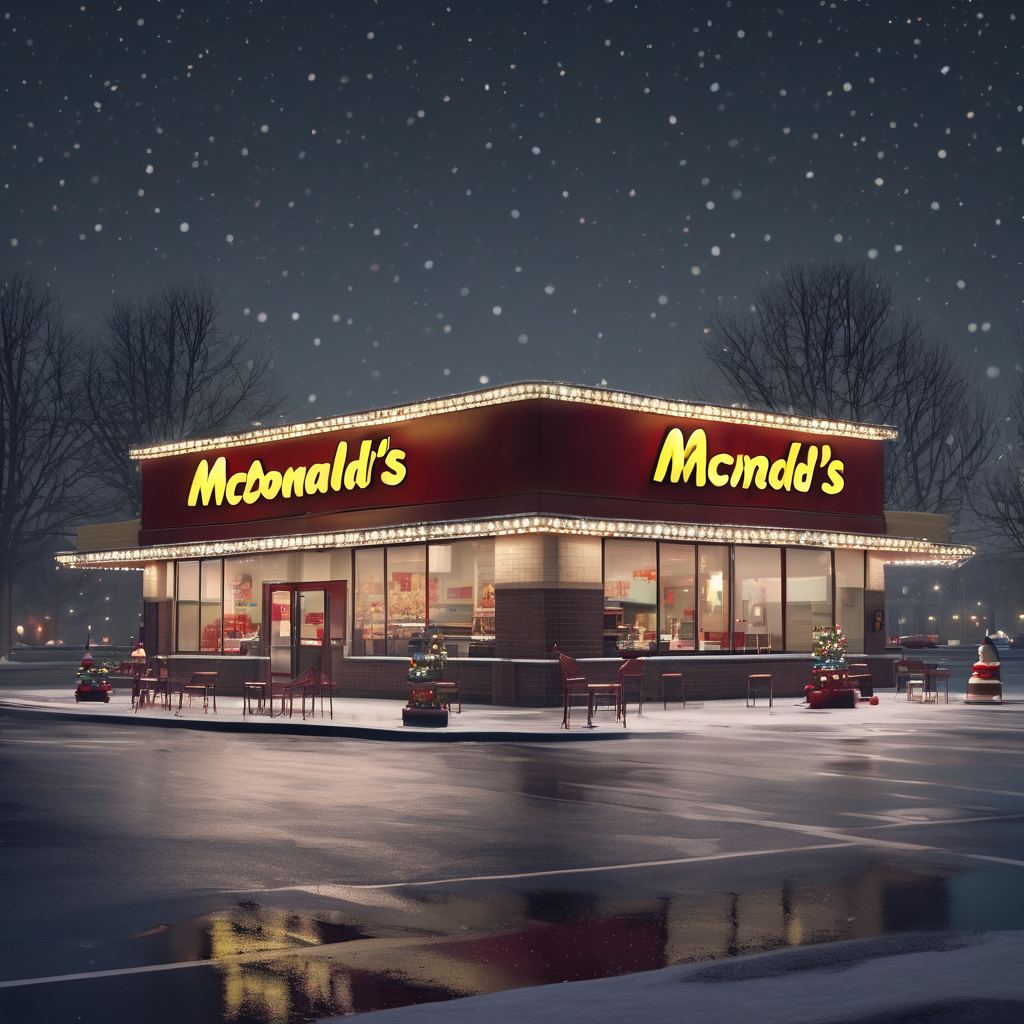
In December 2025, McDonald's Netherlands faced significant public backlash after releasing a Christmas commercial created using artificial intelligence. Developed by the creative agency The Sweetshop with their proprietary AI tool, 'The Gardening Club, ' the ad presented unconventional holiday-themed visuals that sharply deviated from traditional festive imagery. Notably, unsettling elements such as balloon hands and fireball cookies perplexed many viewers, eliciting discomfort instead of joy. Rather than inspiring holiday cheer, the commercial’s chaotic tone and surreal content polarized the audience and drew considerable criticism toward both its concept and execution. This backlash highlights ongoing challenges brands encounter when incorporating AI into creative processes. Although AI offers innovation and efficiency in content creation, this event reveals the dangers of over-reliance on automated tools without adequate human oversight. The emotional and cultural subtleties critical to holiday advertising are difficult for AI to fully comprehend or replicate, emphasizing that AI must be paired with human judgment to produce content that resonates appropriately with audiences. The episode serves as a cautionary example for marketers and agencies experimenting with AI-generated advertising. Despite rapid advancements, understanding audience expectations, emotional tone, and cultural context remains vital for successful campaigns. Moving forward, balanced collaboration between AI-driven innovation and human creativity is essential, with brands maintaining vigilant guidance and review of AI-produced content to avoid reputational harm or alienating consumers. The McDonald's Netherlands commercial sparked broader industry discussions on AI's role and limits in creative work. While AI can streamline production and generate unique ideas, it also introduces risks when employed without sufficient checks and balances.
Experts stress integrating ethical considerations and cultural sensitivity into AI programming to prevent unsettling or controversial outputs. Consumer reactions to the ad underscore how audience perception significantly impacts marketing success. In an era amplified by social media, any discord between brand messaging and consumer expectations can trigger rapid and widespread criticism. Therefore, robust review processes and testing AI-generated content across diverse audience segments before release become increasingly important. AI in advertising remains an evolving field, with many agencies striving to balance automation with human input. Tools like The Sweetshop’s 'The Gardening Club' showcase cutting-edge creative capabilities, yet experiences like the McDonald's campaign demonstrate that technology cannot replace the nuanced insights and emotional intelligence human creators provide. As AI advances, its capacity to better grasp human emotions and cultural nuances will improve. Until then, the advertising community must approach AI integration thoughtfully, viewing technology as a means to enhance rather than substitute human creativity. Following the controversy, McDonald's Netherlands and The Sweetshop acknowledged public feedback and committed to refining their approach. They plan to increase human oversight in future AI-assisted projects to better align campaigns with audience expectations and brand values. This incident exemplifies both the promise and pitfalls of AI in marketing. It underscores the indispensable role of human editorial judgment to ensure AI-generated content communicates effectively, resonates emotionally, and preserves brand integrity. As more companies adopt AI-driven creativity, lessons from the McDonald's Netherlands experience will be crucial in guiding responsible and successful use of this transformative technology.
McDonald's Netherlands AI Christmas Ad Sparks Backlash Over Unsettling Visuals




Artificial intelligence (AI) has become a powerful tool in search engine optimization (SEO), transforming how businesses improve online visibility by offering numerous advantages alongside notable challenges.

Salesforce’s comprehensive analysis of the 2025 Cyber Week shopping period reveals groundbreaking insights into consumer behavior and retail trends influenced by the rapid adoption of artificial intelligence (AI) and AI-powered agents.

Artificial Intelligence (AI) is rapidly reshaping social media management, with its influence becoming increasingly evident as we move into the mid-2020s.

Yann LeCun, the renowned researcher celebrated for his pioneering work in artificial intelligence and serving as the vice president and chief AI scientist at Meta, is set to begin an exciting new chapter by launching his own AI start-up in Paris.

Artificial intelligence (AI) is rapidly revolutionizing search engine optimization (SEO), ushering in a new era of digital marketing that leverages advanced technology to boost online visibility and effectiveness.

Digitalization is transforming the shipping industry by enhancing flexibility, efficiency, and environmental sustainability, with Artificial Intelligence (AI) playing a pivotal role in optimizing maritime operations.

OpenAI is gearing up to release GPT-5, the latest iteration of its cutting-edge language model, scheduled for early 2026.
Launch your AI-powered team to automate Marketing, Sales & Growth

and get clients on autopilot — from social media and search engines. No ads needed
Begin getting your first leads today


Lorem ipsum dolor sit amet consectetur adipisicing elit. Fuga dolor minus maiores. Aut vero expedita dicta, dolorem odit excepturi odio doloremque voluptatem repellat aliquam? Dolores nemo eum id pariatur! Nobis!

Create your own avatar to work for you — completely free of charge!
Sign up with Google


We've sent a confirmation email to
Please check your inbox and click the link to complete your registration
Didn’t receive it? Check your Spam or Promotions folder
and get clients without any advertising investment!

Create and publish viral social media content on autopilot



AI sales managers work 24/7, with no need for sleep, food, or breaks, and speak all languages.
You have unsubscribed from the mailing list recklessly but successfully.
We are not saying goodbye and look forward to seeing you again.