
Top AI Marketing Trends for 2025: Insights from Innovation Leader Manolis Perrakis
Brief news summary
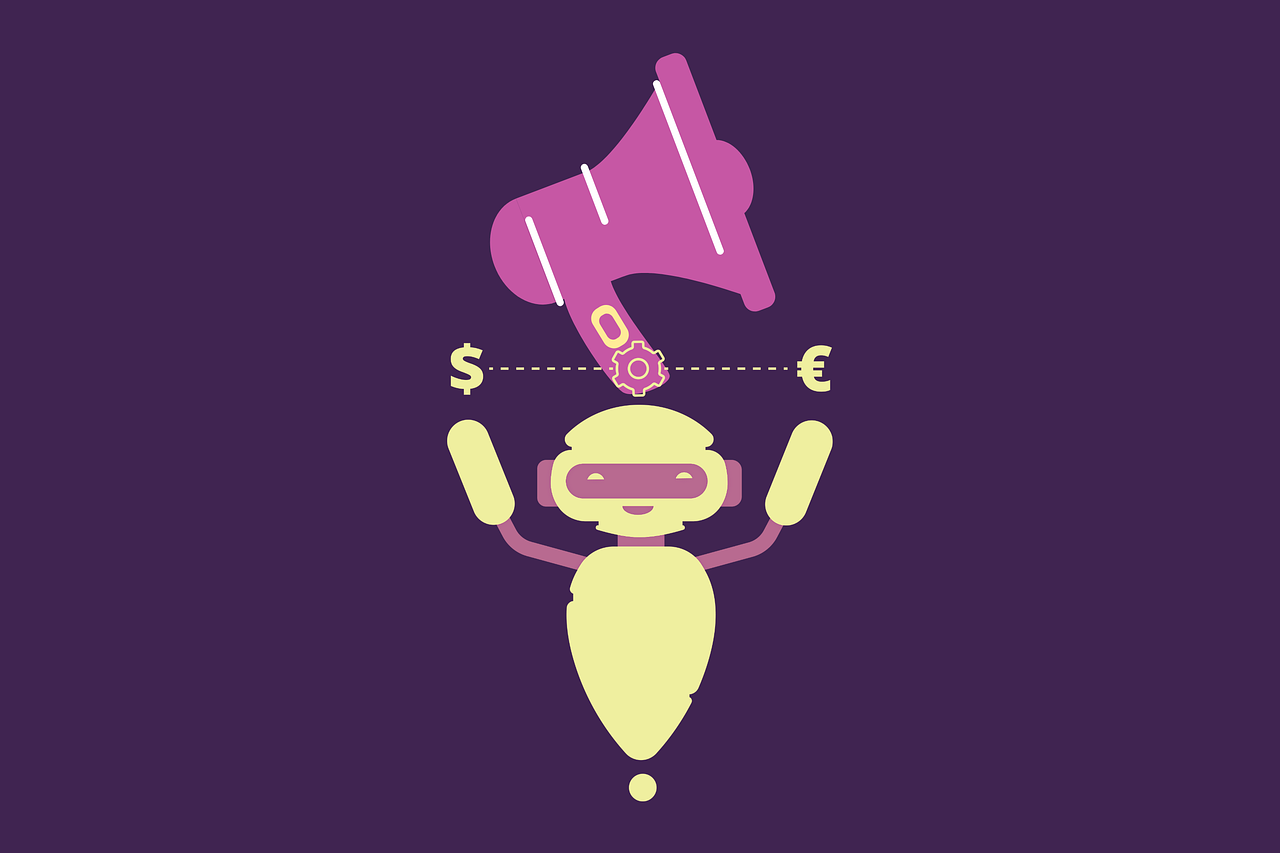
The integration of artificial intelligence (AI) in marketing is revolutionizing the industry by blending automation with enhanced human creativity. Recent insights from MARKETECH APAC and Manolis Perrakis, Innovation Director at We Are Social Singapore, highlight key AI marketing trends shaping 2025 and 2026. These include AI agents powered by advanced cloud infrastructure that automate routine tasks while amplifying human creativity rather than replacing it. Tools such as Nano Banana Pro and OpenAI GPTs enable marketers to focus more on strategy and artistic expression. The rise of generative AI across text, image, 3D, and video content is transforming creation processes and enabling immersive, real-time experiences. Innovations like Google’s Genie 3 “World Models” support hyper-personalized, interactive virtual reality environments. Perrakis stresses the importance of responsible AI usage, calling for transparent and ethical frameworks to manage uncertain data sources. Although fully autonomous AI-driven campaigns remain in development, AI currently acts as a collaborative partner driving creativity and ethical oversight in marketing.The rise and development of artificial intelligence in marketing and advertising have become hot topics within the industry, sparking polarized opinions among leaders. Whether viewed as a beneficial evolution or a potential threat, AI has undoubtedly influenced both the conception and execution phases in marketing. With this context, MARKETECH APAC published a byline titled "What’s NEXT in Marketing: From AI agents to beyond LLM–these are AI marketing trends for 2025, " offering an initial glimpse of AI marketing trends expected this year. Due to its significant impact in readership and relevance, the piece was honored as Thought Leadership of the Year. To explore these insights further and anticipate 2026 trends, we interviewed Manolis Perrakis, Innovation Director at We Are Social Singapore and author of the piece. He discussed the progression of AI marketing trends and how marketers can adapt. **AI Agents: Friend or Foe in Creativity?** Manolis highlights that with major cloud infrastructure advancements supporting voice-to-voice AI agents, their use will expand across customer service, development, language translation, gaming, and entertainment. He favors AI agents and workflows for automating mundane, repetitive, and complex tasks, which streamlines the creative process. He emphasizes that human creativity remains irreplaceable despite automation. Creative teams are discovering new ways to augment content creation beyond past limitations. Tools like Nano Banana Pro, Veo 3. 1, Sora 2, and Flux 2 empower creatives to flourish, but human input is essential for strategic direction, orchestration, and final refinement. Looking ahead, Manolis expects a rise in purpose-built automations designed not to replace human talent but to amplify creativity. Platforms like Gemini Gems and OpenAI GPTs, alongside advanced methods such as n8n nodes and vibecoded apps, will become widespread. These will act as research agents, brainstorming assistants, and support visualization workflows, handling heavy tasks to allow focus on craft. This will enable tackling more complex creative challenges with AI’s aid. **Evolution of GenAI Content: Images to 3D** Manolis confirms AI-generated content will continue proliferating in 2025 across all media.
Beyond text and images, video and audio generation technologies will improve in quality and consistency. The friction between creative ideas and visual or video output is fading, transforming communication and idea expression in pitches, ideation, and content creation phases. Currently, image, 3D, and video AI models are integrated within creative workflows to produce traditional and experiential content rapidly. High-fidelity assets and immersive environments can now be prototyped at unprecedented speeds. The ultimate breakthrough will come with World Models, like Google’s Genie 3, which merge image, video, and 3D into real-time content generation. These technologies promise to revolutionize content creation and consumption, allowing experiences such as revisiting past holidays through interactive 3D worlds generated from a single photo or pausing movies to explore scenes virtually. Brands will create personalized, interactive VR experiences. **Ethics and Transparency in AI Marketing** Regarding ethical AI-driven creativity, Manolis notes many creatives lack awareness of their datasets' origins, often due to limited technical expertise. Over the past three years, creatives have faced the dual challenge of rapidly learning new tools while ensuring compliance. He adds that many AI providers offer limited transparency on datasets and proprietary information, prompting lawsuits from entertainment industries targeting foundational models. Because of this legal ambiguity, creatives alone cannot determine ethical and legal AI use. Organizations must establish responsible AI frameworks to guide employees on best practices. At We Are Social, internal legal teams provide clear guidelines on permissible GenAI models and those protecting against copyright claims. When protection is lacking, indemnification from clients is required. Until AI companies disclose training data transparently, creatives should adhere to approved GenAI tools and collaborate closely with legal advisors to avoid infringement. **AI Autonomous Campaign Ideation** Asked how close agencies are to fully automating campaign ideation, Manolis believes it’s not about proximity but about current adoption levels, which remain low but will rise soon. He sees end-to-end automation fitting in repetitive creative tasks or as inspiration for overcoming blocks; however, for high-level strategic concepts, AI remains a tool to amplify human strategy rather than replace it. **Recognition of Thought Leadership** This recognition was based on Google Analytics data identifying the most-read 2025 stories, editorial validation of leadership contributions, campaign outcomes, and overall impact in the industry.
Watch video about
Top AI Marketing Trends for 2025: Insights from Innovation Leader Manolis Perrakis
Try our premium solution and start getting clients — at no cost to you

I'm your Content Creator.
Let’s make a post or video and publish it on any social media — ready?

Content Maker
Last news
The Best for your Business
Hot news
Racist AI fakes are now a business — and a politi…
AI-generated racist fake videos have emerged as a troubling and dangerous phenomenon that is reshaping political discourse and reinforcing harmful stereotypes, especially targeting Black communities.

AI and SEO: Navigating Ethical Considerations in …
The integration of artificial intelligence (AI) into search engine optimization (SEO) is reshaping how marketers approach digital marketing, delivering greater efficiency, accuracy, and insights.

Microsoft Pushes Back on AI Sales Growth Concerns
Microsoft is facing pressure after a report revealed that several sales teams failed to meet growth targets for Azure Foundry, a key enterprise AI product.

OpenAI Acquires AI Hardware Startup io for $6.5 B…
OpenAI, a leader in artificial intelligence research, has made a major strategic acquisition to strengthen its hardware capabilities by purchasing io, an AI hardware startup, for $6.5 billion.

AI And The Death of The 2021 Sales Process
Classic sales tactics—hard work, deep product knowledge, and showing up—still hold value.
NYC Marketing Expert Augustus Kirby Warns of AI-D…
NEW YORK, NY, December 27, 2025 /24-7PressRelease/ -- As artificial intelligence transforms modern marketing, businesses encounter a growing paradox: although automation offers efficiency and scalability, rapid algorithm changes and opaque AI systems are causing instability across digital channels.
The Role of AI in Local SEO Optimization
Artificial intelligence (AI) is playing an increasingly important role in revolutionizing local search engine optimization (SEO), offering businesses innovative ways to enhance their online presence within specific geographic areas.
AI Company
Launch your AI-powered team to automate Marketing, Sales & Growth

and get clients on autopilot — from social media and search engines. No ads needed
Begin getting your first leads today

Your News is ready
Your article is ready

Lorem ipsum dolor sit amet consectetur adipisicing elit. Fuga dolor minus maiores. Aut vero expedita dicta, dolorem odit excepturi odio doloremque voluptatem repellat aliquam? Dolores nemo eum id pariatur! Nobis!
Generating video takes longer than text.







