
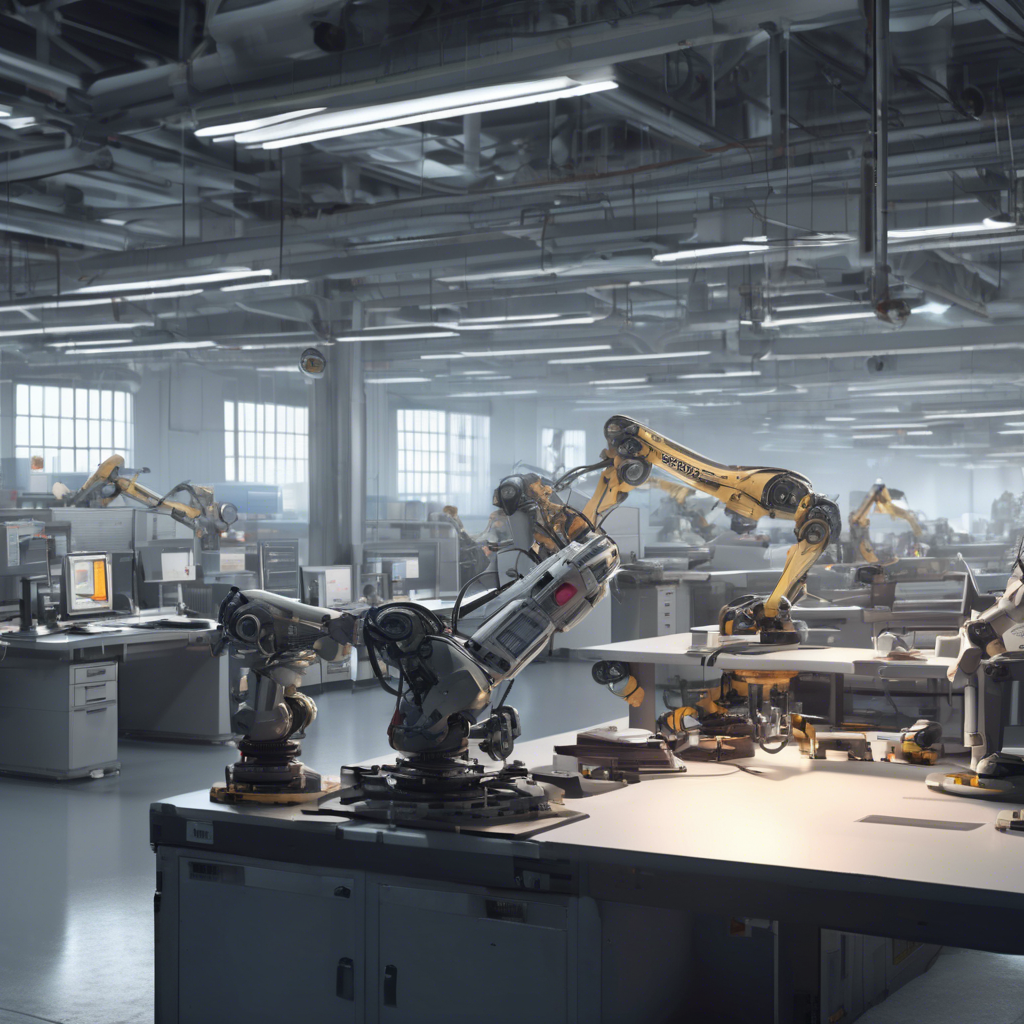
Keith Sonderling, former deputy Labor Secretary under the Trump administration, recently highlighted a major barrier to AI adoption in the U. S. workforce: employee mistrust. Speaking at a Business Roundtable event, he explained that skepticism among workers about their employers’ use of AI is significantly slowing its integration across industries. AI is widely seen as transformative, capable of enhancing productivity, decision-making, and innovation. However, many employees fear job loss due to automation, creating resistance to AI-driven tools. Sonderling acknowledged these concerns are valid, as studies predict substantial job displacement from increasing automation and AI’s ability to replace routine and some complex tasks. This anxiety about job security challenges the smooth adoption of AI. To address this, the Trump administration advocated a proactive education approach. Sonderling emphasized introducing AI knowledge early in education to equip future workers with relevant skills and reduce fear by fostering awareness and understanding. Supporting this, an executive order mandated the development of AI curricula in schools nationwide.
This initiative aims to demystify AI, prepare students for an AI-integrated workforce, and promote trust by tackling challenges from the ground up. The broader conversation around AI in the workplace balances technological promise with legitimate concerns about displacement and ethics. Sonderling’s comments stress the importance of addressing human factors—trust and acceptance—alongside technology. As AI becomes more embedded in business functions, transparent communication and employee involvement will be crucial. Employers need to implement AI responsibly and engage workers in understanding its impact on their roles. The administration’s education focus reflects a forward-looking strategy to ensure workforce adaptation and maximize AI’s economic benefits. While challenges remain, such efforts strive to build an informed, confident workforce that views AI as an opportunity rather than a threat. In summary, overcoming employee mistrust is essential for successful AI adoption. Through education and transparency, businesses and government can collaborate to make AI a tool for augmentation and progress, fostering a resilient, skilled, and adaptable American workforce prepared for the future economy.
Addressing Employee Mistrust to Accelerate AI Adoption in the U.S. Workforce




The Walt Disney Company has initiated a significant legal action against Google by issuing a cease-and-desist letter, accusing the tech giant of infringing on Disney’s copyrighted content during the training and development of generative artificial intelligence (AI) models without providing compensation.

As artificial intelligence (AI) advances and increasingly integrates into digital marketing, its influence on search engine optimization (SEO) is becoming significant.

MiniMax and Zhipu AI, two leading artificial intelligence companies, are reportedly preparing to go public on the Hong Kong Stock Exchange as early as January next year.

Denise Dresser, CEO of Slack, is set to leave her position to become Chief Revenue Officer at OpenAI, the company behind ChatGPT.

The film industry is experiencing a major transformation as studios increasingly incorporate artificial intelligence (AI) video synthesis techniques to improve post-production workflows.

AI is revolutionizing social media marketing by offering tools that simplify and enhance audience engagement.

The emergence of AI-generated influencers on social media signifies a major shift in the digital environment, sparking widespread debates about the authenticity of online interactions and the ethical concerns tied to these virtual personas.
Launch your AI-powered team to automate Marketing, Sales & Growth

and get clients on autopilot — from social media and search engines. No ads needed
Begin getting your first leads today


Lorem ipsum dolor sit amet consectetur adipisicing elit. Fuga dolor minus maiores. Aut vero expedita dicta, dolorem odit excepturi odio doloremque voluptatem repellat aliquam? Dolores nemo eum id pariatur! Nobis!

Create your own avatar to work for you — completely free of charge!
Sign up with Google


We've sent a confirmation email to
Please check your inbox and click the link to complete your registration
Didn’t receive it? Check your Spam or Promotions folder
and get clients without any advertising investment!

Create and publish viral social media content on autopilot



AI sales managers work 24/7, with no need for sleep, food, or breaks, and speak all languages.
You have unsubscribed from the mailing list recklessly but successfully.
We are not saying goodbye and look forward to seeing you again.