
AI-Generated Models Spark Debate in Fashion: Guess Campaign in Vogue August 2025
Brief news summary
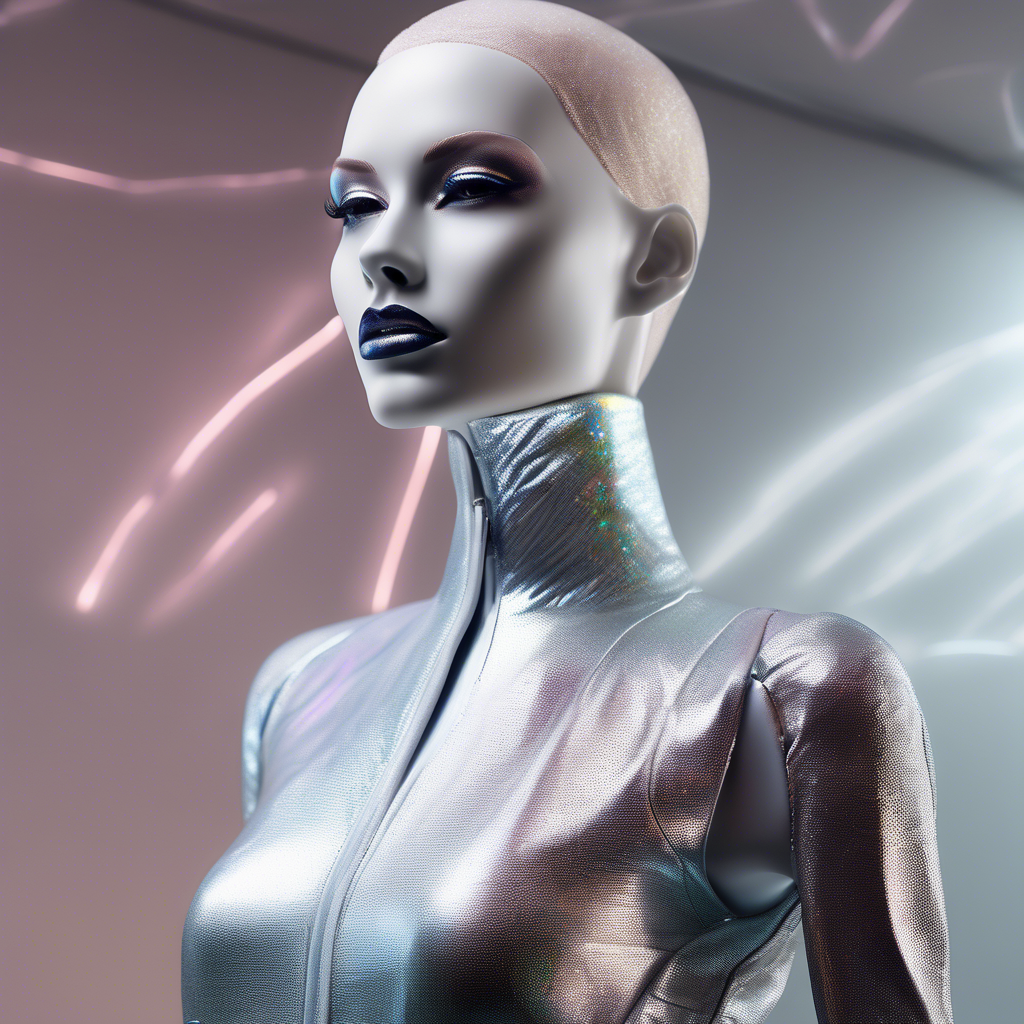
The August 2025 issue of American Vogue sparked controversy by featuring Anne Hathaway alongside ads from Guess using AI-generated models created by London agency Seraphinne Vallora. These digital models, depicted as conventionally attractive white women, raised concerns about the impact on real models and diversity in fashion. Critics argue AI models, used by brands such as Guess, Mango, and Levi’s, may limit opportunities for human talent and perpetuate narrow beauty standards without genuine representation. Although real models were involved in the creative process, many consumers fear AI reinforces unrealistic ideals. Some brands use AI “twins” of actual models for greater transparency, blending physical and digital presence. Experts highlight AI’s efficiency benefits but stress responsible use and fairness to maintain authentic human connections. Legislation like New York’s Fashion Workers Act reflects the urgent need for regulations as AI transforms the fashion industry.American Vogue’s August 2025 issue, featuring Anne Hathaway on the cover, is drawing significant attention not just for the celebrity but for an AI-generated model campaign by Californian clothing company Guess inside its pages. At first glance, the ads display a traditionally attractive Caucasian woman wearing Guess clothing, but small print reveals the figure is entirely created through artificial intelligence. This campaign was produced by Seraphinne Vallora, a London-based AI marketing agency also featured in Elle, The Wall Street Journal, and Harper’s Bazaar. TikTok user @lala4an’s viral video exposing these AI models garnered over 2. 7 million views, sparking debates about the implications for real-life models and consumer expectations, especially among youth. Critics argue the use of AI models creates unrealistic beauty standards and threatens jobs in modeling. Comments on social media reflect frustration that ordinary women now must compare themselves not only to edited real models but to non-existent AI ones, leading to calls for boycotts of Guess and Vogue. Vogue’s parent company Condé Nast stated no AI models have appeared editorially in Vogue, though digitally created models have featured in licensed international editions like Vogue Singapore. Guess did not comment on the controversy. Seraphinne Vallora’s co-founders Valentina Gonzalez and Andreea Petrescu defended their work, emphasizing that real models were still used in the creative process and that their AI images are developed based on those references. They explained that Guess co-founder Paul Marciano selected two AI models—a blonde and a brunette—from multiple drafts for the campaign. The company believes AI offers clients greater efficiency and choice, reducing both time and cost compared to traditional campaigns. Originating as a jewelry label constrained by budget, Seraphinne Vallora pivoted to AI marketing, using their architectural backgrounds in photography and digital media to create their own AI model, which gained notable online engagement. Guess is not alone in deploying AI models. Mango launched an AI-generated teenage campaign in 2024, and Levi’s began testing AI-generated models in 2023 to reflect more diverse body types and skin tones. These initiatives met mixed reactions, with concerns that AI models representing minorities could be a superficial form of diversity that sidelines real people, including models and creative professionals like photographers and makeup artists. Mango’s CEO defended faster content creation as the goal, while Levi’s reaffirmed commitment to diverse live models and denied AI was a diversity strategy. A notable issue is the lack of diversity in AI models themselves.
Seraphinne Vallora’s AI figures predominantly embody conventional Western beauty ideals—white, symmetrical, fit—with Petrescu acknowledging client demands shaped these choices rather than any technical limitation. Testing showed such images garnered higher engagement. Model advocacy leader Sara Ziff stresses the need for responsible and ethical AI deployment that considers who benefits, who is seen, and who is excluded. AI models align with the rise of virtual influencers like Lil Miquela and Shudu, who have gained major social media followings and partnerships with luxury brands. Some AI creations, like H&M’s “digital twins” for real models, represent a blend of real and virtual, giving models rights over their AI counterparts and the ability to “be in multiple places at once. ” H&M’s chief creative officer stressed the company’s human-centric approach while exploring AI responsibly. Luxury brands have experimented with digital doubles since 2021, with Dior creating a virtual version of ambassador Angelababy and Burberry featuring a computerized Naomi Campbell. Fashion industry strategist Lara Ferris recalls early efforts to photograph products on virtual models without humans, illustrating how AI enables rapid, scalable image creation. However, such mass production raises ethical and environmental concerns, and Ferris notes it lacks a premium feel. Digital model studio Lalaland. ai, whose CEO Michael Musandu collaborated with Levi’s, indicates AI use is widespread but often undisclosed, lacking legal requirements to inform consumers. Musandu emphasizes AI as a supplement rather than replacement to increase representation for people of color online. Brands continue to employ real models alongside AI to boost output, recognizing human models forge genuine connections with consumers. Ferris concurs that the real distinction lies in personality and engagement; successful models and influencers connect actively with audiences, a quality AI alone cannot replicate. Despite advances making it harder to differentiate AI models from humans online, authentic people remain invaluable. Nonetheless, AI introduces new risks for models, a sector historically lacking workplace protections. The recent New York State Fashion Workers Act aims to regulate the industry with complaint processes and penalties, partially in response to such challenges. Sara Ziff acknowledges AI is not inherently harmful but stresses it could be exploited without safeguards, urging enforcement of proper regulations. The new law marks a beginning, not a comprehensive solution, to the evolving complexities AI brings to fashion modeling.
Watch video about
AI-Generated Models Spark Debate in Fashion: Guess Campaign in Vogue August 2025
Try our premium solution and start getting clients — at no cost to you

I'm your Content Creator.
Let’s make a post or video and publish it on any social media — ready?

Content Maker

Last news
The Best for your Business
Hot news

15 Ways Sales Has Changed This Year in the Age of…
Over the last 18 months, Team SaaStr has immersed itself in AI and sales, with a major acceleration starting June 2025.
OpenAI's GPT-5: What We Know So Far
OpenAI is gearing up to launch GPT-5, the next major advancement in its series of large language models, with the release expected in early 2026.
AI in SEO: Transforming Content Creation and Opti…
Artificial intelligence (AI) is swiftly reshaping the field of content creation and optimization within search engine optimization (SEO).

AI Video Conferencing Solutions Improve Remote Wo…
The shift to remote work has highlighted the crucial need for effective communication tools, leading to the rise of AI-powered video conferencing solutions that enable seamless collaboration across distances.

AI In Medicine Market Size, Share, Growth | CAGR …
Overview The Global AI in Medicine Market is forecasted to reach approximately USD 156
Google's Danny Sullivan & John Mueller On SEO For…
John Mueller from Google hosted Danny Sullivan, also from Google, on the Search Off the Record podcast to discuss "Thoughts on SEO & SEO for AI
Lexus takes generative AI for a spin in new holid…
Dive Brief: Lexus has launched a holiday marketing campaign created using generative artificial intelligence, according to a press release
AI Company
Launch your AI-powered team to automate Marketing, Sales & Growth

and get clients on autopilot — from social media and search engines. No ads needed
Begin getting your first leads today

Your News is ready
Your article is ready

Lorem ipsum dolor sit amet consectetur adipisicing elit. Fuga dolor minus maiores. Aut vero expedita dicta, dolorem odit excepturi odio doloremque voluptatem repellat aliquam? Dolores nemo eum id pariatur! Nobis!
Generating video takes longer than text.







