
China Advances AI Integration in Manufacturing: Industrial Technology Developments for 2025
Brief news summary
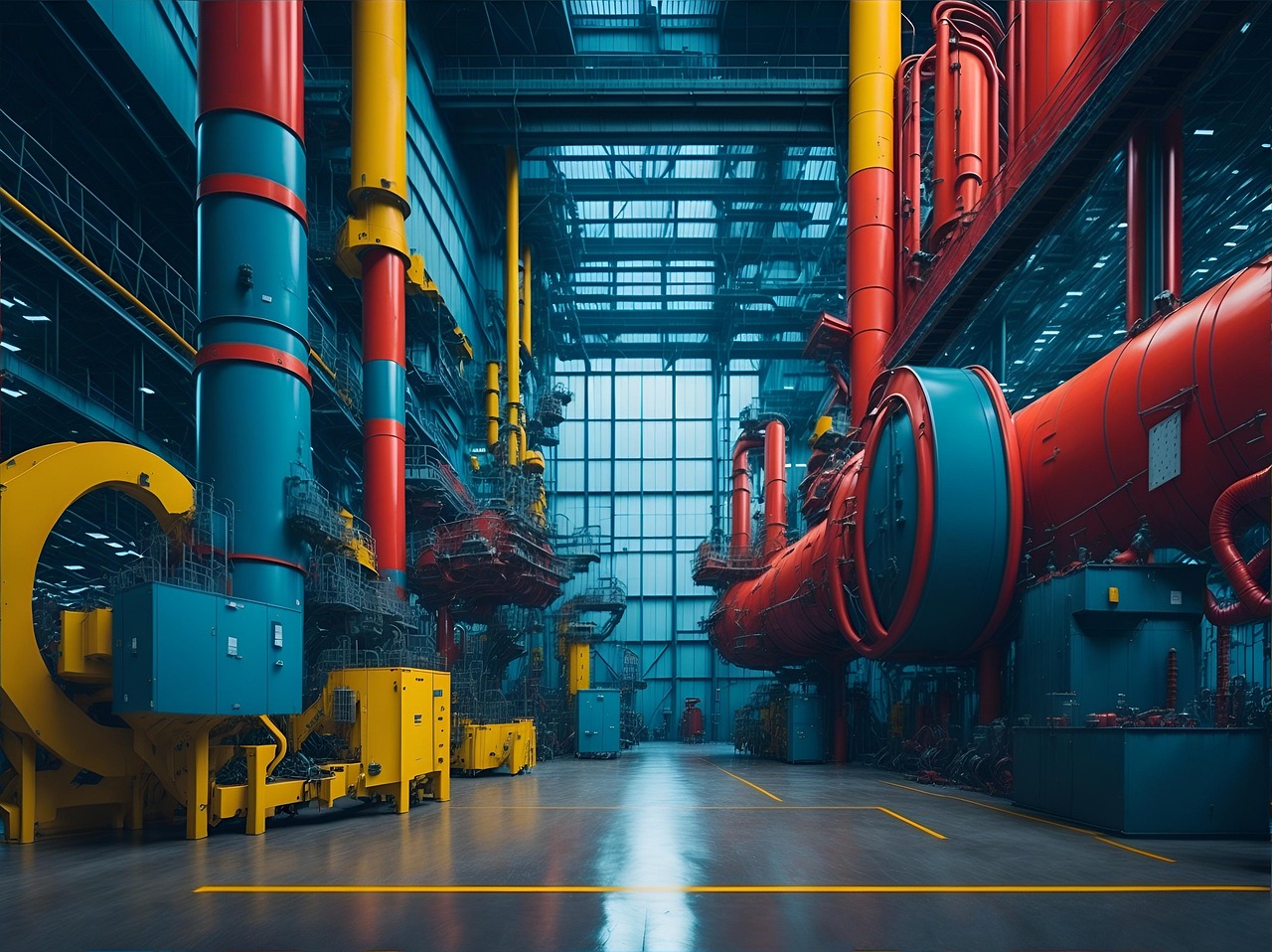
The State Council Information Office reported notable advances toward China’s 2025 industrial and information technology targets. Xie Cun from the Ministry of Industry and Information Technology highlighted that AI is embedded in over 70% of smart factory applications, fueling manufacturing innovation. More than 6,000 specialized vertical domain models enhance workflows and product design across various industries. Additionally, over 1,700 intelligent manufacturing devices and software platforms support real-time monitoring, predictive maintenance, and adaptive control, increasing productivity and reducing downtime. A major breakthrough in industrial intelligent agents—capable of perception and autonomous decision-making—enables factories to progress from automation to full autonomy. These developments are backed by government policies promoting AI integration with IoT, big data, and 5G technologies. Together, these advancements enhance efficiency, quality, and customization in manufacturing while driving demand for skilled labor and workforce training. China’s progress underscores its strong commitment to innovation, industrial competitiveness, and sustainable economic growth.The State Council Information Office recently held a press conference to highlight major achievements in industrial and information technology development for 2025. Xie Cun, Director of the Information and Communication Development Department at the Ministry of Industry and Information Technology, provided detailed insights into the progress and integration of advanced technologies in manufacturing. He noted that artificial intelligence (AI) has significantly penetrated the industrial sector, especially in leading smart factories, with AI technologies embedded in over 70 percent of business scenarios. This widespread adoption has enhanced operational efficiency, decision-making, and production quality. A key milestone is the development of more than 6, 000 vertical domain models tailored to specific industrial applications. These models enable customized solutions that address unique manufacturing challenges, optimizing workflows, improving product design, and streamlining resource management. Additionally, large-scale deployment of intelligent manufacturing equipment and industrial software—which now includes over 1, 700 essential smart devices and platforms—supports real-time monitoring, predictive maintenance, and adaptive control to minimize downtime and boost productivity. One notable advancement is the emergence of industrial intelligent agents with sophisticated perception, decision-making, and execution capabilities. These agents represent a shift from traditional automation toward autonomous manufacturing, interpreting sensor data, making decisions independently, and performing complex tasks without human intervention—thereby redefining industrial automation's scope.
This move from automation to autonomy marks a paradigm shift, transforming factories into adaptive, self-regulating entities that continuously improve operations and enhance workplace safety by reducing reliance on manual oversight. The Ministry’s commitment to integrating AI in manufacturing aligns with national goals to enhance industrial competitiveness and sustainability. Targeted investments in research, development, and policy support have fostered an ecosystem conducive to innovation and practical AI applications. Looking forward, expanding AI integration with technologies like the Internet of Things (IoT), big data analytics, and 5G connectivity is expected to further boost productivity, quality, and customization across the manufacturing value chain. These technological advancements have significant implications for workforce development. As industries adopt smarter systems, there is increased demand for professionals skilled in AI, data analysis, and system integration. Equipping the workforce with these competencies is vital to maintaining industrial innovation momentum. In summary, the State Council Information Office’s report depicts a promising outlook for China’s industrial and information technology sector in 2025. The deep integration of AI in smart factories, proliferation of vertical domain models, widespread use of intelligent equipment, and progress toward autonomous manufacturing collectively demonstrate the nation’s strides in embracing the industrial future—strengthening manufacturing capabilities while setting the stage for sustained innovation and economic growth.
Watch video about
China Advances AI Integration in Manufacturing: Industrial Technology Developments for 2025
Try our premium solution and start getting clients — at no cost to you

I'm your Content Creator.
Let’s make a post or video and publish it on any social media — ready?

Content Maker

Last news
The Best for your Business
Hot news

AI SEO Agency: How an AI SEO Agency Audits for Ge…
Search engines are rapidly evolving, making traditional SEO methods insufficient in today’s AI-driven digital landscape.

AI Video Compression Techniques Improve Streaming…
Streaming services worldwide are increasingly implementing artificial intelligence (AI)-driven video compression technologies to greatly improve user experience.

Li Auto CEO reaffirms AI focus in internal meetin…
Li Auto employees are increasingly eager for clear strategies to reverse the company's weak sales, despite the CEO’s ongoing focus on AI initiatives.

Coca-Cola's AI-Generated Holiday Ads Spark Contro…
In November 2024, Coca-Cola garnered significant attention by using artificial intelligence (AI) to produce three commercials for its annual holiday campaign, marking a notable shift toward incorporating cutting-edge technology in its festive advertising.

Oracle's AI-Driven Cloud Services: Enhancing Busi…
Oracle is making significant strides in its cloud services by integrating advanced artificial intelligence (AI) capabilities designed to help businesses streamline their operations.

AI-Powered SEO: Case Studies and Success Stories
In today’s rapidly evolving digital landscape, businesses increasingly seek innovative methods to boost their online presence and SEO performance, with many turning to artificial intelligence (AI) to gain a competitive advantage in search rankings and web visibility.

AI Video Surveillance Systems Enhance Public Safe…
Law enforcement agencies worldwide are increasingly adopting artificial intelligence (AI) to boost public safety through advanced video surveillance technologies.
AI Company
Launch your AI-powered team to automate Marketing, Sales & Growth

and get clients on autopilot — from social media and search engines. No ads needed
Begin getting your first leads today

Your News is ready
Your article is ready

Lorem ipsum dolor sit amet consectetur adipisicing elit. Fuga dolor minus maiores. Aut vero expedita dicta, dolorem odit excepturi odio doloremque voluptatem repellat aliquam? Dolores nemo eum id pariatur! Nobis!
Generating video takes longer than text.







