
Eight-Step Framework for Building Functional AI Agents in Marketing Automation

Brief news summary
A Reddit developer introduced an eight-step framework for creating effective AI agents focused on autonomous marketing automation tasks. Starting with narrow objectives like appointment booking or email summarization, the approach leverages large language models (e.g., GPT, Claude, LLaMA) combined with external tools such as web scrapers and calendar APIs. The development process is iterative, involving cycles of model input, tool execution, and feedback, with memory management evolving from short-term to broader context handling. Interfaces are designed for functionality, typically using command-line tools or simple web dashboards. Success depends on rigorous testing, refinement, and strict scope control to avoid feature creep. Advanced elements include pre-action planning, logging, agent contracts, and safeguards like timeouts and retries. Supported by over $1.1 billion in 2024 funding and upcoming releases from firms like Adobe and Amazon, this framework meets growing enterprise demands for AI-driven marketing automation. Agencies report significant efficiency improvements and expect up to an 80% increase in client portfolios through automation. Overall, it provides practical, scalable guidance for building reliable, specialized AI agents to address expanding global marketing automation needs.A comprehensive eight-step framework for building functional AI agents has recently emerged from developer discussions, aiming to resolve persistent challenges in creating autonomous marketing automation systems. This methodology, shared one month ago by Reddit user Icy_SwitchTech in the AgentsOfAI community, offers practical guidance for organizations to implement AI-driven marketing operations while avoiding common pitfalls. The framework arose from widespread marketer difficulties in AI agent development, particularly the tendency to start with overly ambitious, abstract projects that often lead to abandonment and resource waste. Instead, it advocates beginning with a narrowly defined problem—focusing on specific tasks like booking appointments, monitoring job boards, or summarizing unread emails—to simplify design and debugging. Key steps include careful base model selection, favoring existing large language models such as GPT, Claude, Gemini, or open-source options like LLaMA and Mistral, while avoiding custom model training initially. Emphasizing reasoning and structured outputs ensures foundational agent functionality. Crucially, the methodology highlights integrating external tools — a frequently overlooked aspect. Functional agents require capabilities beyond chatbot interactions, including web scraping (via Playwright or Puppeteer), email management (through Gmail or Outlook APIs), calendar integration, and file operations like PDF processing. A skeleton workflow follows a loop pattern: processing user input, interpreting model instructions through prompts, determining next steps, executing necessary tools, integrating results, and continuing until task completion. This model-to-tool-to-result cycle drives agent operations. Memory design is approached cautiously; short-term context management for recent messages is preferred initially, while persistent memory uses databases or JSON files before implementing complex vector databases. Interfaces begin with simple command-line environments for testing and may evolve into web dashboards (using Flask, FastAPI, or Next. js), Slack or Discord integration, or executable scripts aimed at practical usability. Iterative refinement is vital, recognizing that perfect functionality at launch is unrealistic. Real-world task execution exposes failures, enabling fixes and multiple development cycles to achieve reliability. The methodology stresses scope management to prevent excessive feature bloat, advocating specialization (e. g. , an agent focused solely on appointment booking) for greater effectiveness. Community feedback links this framework to traditional software engineering principles adapted for AI, while acknowledging unique challenges posed by non-determinism, prompt-based programming, and tool integration contracts absent in classical curricula. Advanced considerations include planning multi-step model actions, basic logging of inputs, outputs, and tool usage, and maintaining short-term memory across steps to avoid mid-task data loss. Production-level safeguards encompass defined agent contracts, input-output validation, resource budgets, timeout and retry logic, human intervention triggers, and cost/latency monitoring.
Task histories are stored externally instead of relying on infinite in-memory context. Testing protocols use “golden” test suites with known-answer tasks to detect regressions and validate performance with each update. The methodology responds to a growing enterprise focus on marketing automation. Industry reports show agentic AI—autonomous systems managing complex workflows—is attracting significant investment, with $1. 1 billion equity funding in 2024 and a 985% job posting increase year-over-year. Applications span marketing operations: Adobe’s Experience Platform Agent Orchestrator (launched September 2025) enables multi-step agent planning and response refinement, while Amazon’s agentic AI (also launched September 2025) automates marketplace management, inventory optimization, and advertising campaigns under seller oversight. Marketing professionals must balance automation efficiency with strategic human control, develop first-party data strategies for AI personalization, and set responsible AI benchmarks. Agentic AI also threatens traditional programmatic advertising models by automating campaign setup, targeting, and optimization—areas characterized as complex software domains. Marketing analytics tools incorporate conversational AI layers for direct data interaction and automated workflow handling, reinforcing momentum in AI adoption. IAB Europe reports 85% of European companies deploy AI marketing tools, primarily for content generation and reporting. Educational efforts address implementation challenges, with 60% of firms providing AI training and strong interest in standardized guidelines. Operational transformation is underway; agencies aim to increase account manager client portfolios by 83% via automation. Case studies reveal efficiency gains such as 90% reductions in budget pacing tasks and 80% faster campaign setups, shifting focus toward strategic planning and client relations. This practical framework offers realistic pathways to AI-enabled marketing automation without theoretical complexity. Success hinges on disciplined narrow scoping, iterative refinement, and thoughtful memory design, enabling reliable specialized agents to develop on reasonable timelines while avoiding overambition-related failures. Its community-driven evolution reflects growing industry maturity, prioritizing measurable automation objectives with immediate operational impact and foundational capacity for future growth. --- **Timeline Highlights:** - One month ago: Icy_SwitchTech publishes methodology on Reddit’s AgentsOfAI - July–September 2025: Industry reports and product launches from IAB Europe, IBM, Adobe, Amazon, and Adverity mark increasing agentic AI adoption - Significant investment and research reveal agentic AI’s disruptive potential and broad enterprise uptake --- **Summary:** Reddit developer Icy_SwitchTech’s practical eight-step methodology for building AI agents emphasizes narrow problem focus, selecting existing language models, integrating external tools, constructing iterative workflows, managing memory cautiously, developing usable interfaces, and enforcing scope control. Released amid booming agentic AI adoption across marketing industries in 2024–2025, it guides developers and marketers worldwide in creating autonomous marketing automation systems that balance automation benefits with strategic oversight, laying foundations for transforming digital advertising and analytics.
Watch video about
Eight-Step Framework for Building Functional AI Agents in Marketing Automation
Try our premium solution and start getting clients — at no cost to you

I'm your Content Creator.
Let’s make a post or video and publish it on any social media — ready?

Content Maker

Last news
The Best for your Business
Hot news

Generative Engine Optimization: A VLM and Agent F…
In the rapidly evolving realm of digital content and artificial intelligence, enhancing search visibility on visual platforms poses significant challenges.

Adobe Acquires Semrush to Enhance AI-Powered Mark…
Adobe Systems Inc., the global software giant known for its creative tools, has announced its acquisition of Semrush, a top provider of digital marketing analytics and SEO software.

Deepfake Technology Advances: Implications for Vi…
Deepfake technology has seen remarkable progress in recent years, leading to the creation of highly realistic manipulated videos that convincingly depict individuals saying or doing things they never actually did.

Introducing SMM 2026: The Future of AI-Powered So…
As we progress further into 2026, we are excited to introduce SMM 2026, our innovative social media marketing platform that marks a significant transformation in digital audience engagement.

Shopify Merchants to Pay 4% Fee on ChatGPT Checko…
According to the report, sales completed through chatbot checkouts provided by Google’s AI Model and Gemini, as well as Microsoft’s Copilot, will not incur any additional fees for the time being.

CoreWeave Secures $650 Million Credit Line for AI…
CoreWeave has secured a substantial $650 million credit line to expand its artificial intelligence infrastructure, marking a crucial step as it aims to meet the increasing global demand for AI computing resources.
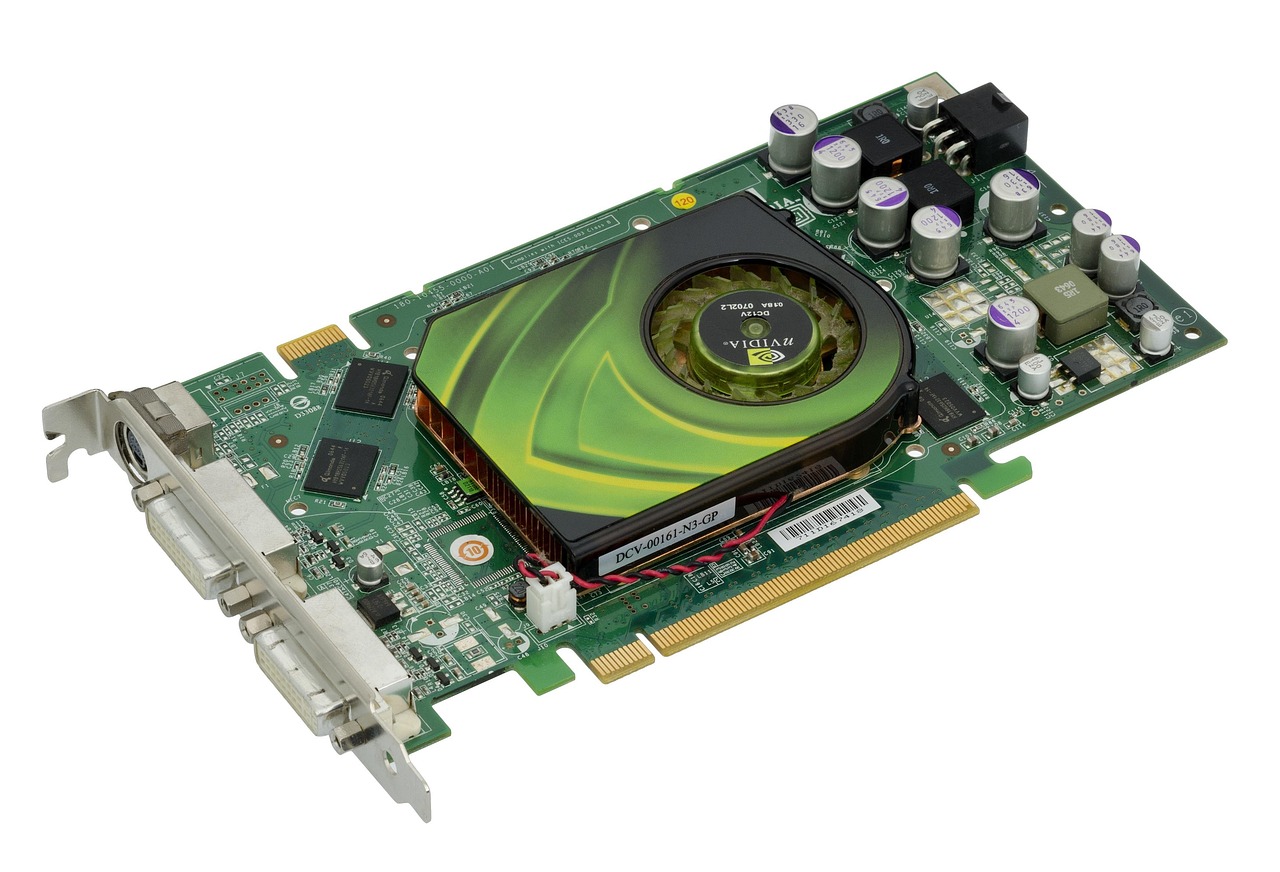
NVIDIA's market cap once again reaches the pinnac…
NVIDIA's Market Capitalization Hits New Highs Amid AI Surge, Driving Demand for High-Speed Copper Cable Connectivity NVIDIA Corporation has once again achieved a major milestone in its market capitalization, fueled by the rapidly expanding interest and adoption of artificial intelligence (AI) technologies across multiple industries
AI Company
Launch your AI-powered team to automate Marketing, Sales & Growth

and get clients on autopilot — from social media and search engines. No ads needed
Begin getting your first leads today

Your News is ready
Your article is ready

Lorem ipsum dolor sit amet consectetur adipisicing elit. Fuga dolor minus maiores. Aut vero expedita dicta, dolorem odit excepturi odio doloremque voluptatem repellat aliquam? Dolores nemo eum id pariatur! Nobis!
Generating video takes longer than text.







