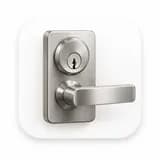
Why does it matter what lock type it is?
Because a residential deadbolt, a commercial mortise cylinder and a smart lock are different repairs, different parts and different prices, and quoting the wrong one on the phone loses the job on arrival. When the property record says which hardware is on which door, the right blank or cylinder goes in the van before it leaves, not after a second trip.
Does it handle emergency lockouts?
Yes. A lockout takes the soonest opening on the calendar while a rekey or an install keeps its regular window, so the night call does not wait behind Thursday's work. On the way, the property's history is on the job: earlier lockouts at that door, the lock that was fitted, and who may authorise entry.
Can I schedule rekeys and installs around emergency calls?
Yes. Planned work — a rekey after a move-out, a deadbolt install, a commercial master-key job — gets an arrival window on the calendar, and a lockout is booked into the soonest opening beside it. If a lockout does push Thursday's rekey, you move one booking, and the job keeps its notes and its quote.
How does locksmith dispatch work with more than one van?
With one van, the calendar is the dispatch: you see the lockout and the afternoon rekeys in one day. When a second technician starts, Smart Dispatch on the paid tiers puts every technician's day on one board, so the lockout goes to whoever has room and the commercial rekey keeps its window.
What does the property record hold?
Each door at the address with its lock type, brand and keyway as you note them, the rekey and replacement history by date, the hardware fitted, the quotes given and who may authorise entry. A storefront that calls twice a year reads as one history at one address, not five unrelated tickets.
How is the right to open a door handled?
Nothing in the software opens a door on a caller's word. With Copper, the receptionist tells every lockout caller, before offering a time, that the technician will ask for ID and proof of residency or ownership on site. The tech checks at the door and notes what was shown on the job, so a later dispute has an answer on file.
Does it handle car key and vehicle lockout jobs?
Yes. A vehicle is its own record on the customer: make, model, year, and whether the key has a chip or a remote fob. A car lockout is booked to the exact spot the car is parked, and the next call for a spare starts with the vehicle already known.
Does a locksmith business get a website with it?
Yes. Free Core builds one landing page on a Neuron address for the searches a locksmith lives on — lockouts, rekeys, lock changes, car keys — with your reviews, the area you cover, common questions and a request form as sections of it. Your own domain and the multi-page site with separate service pages come with Copper.
Is the locksmith software really free?
Free Core has no card, no seat fee and no end date: customers, properties, doors, jobs, quotes, a basic pipeline, the calendar, the landing page and one technician. The business line and the AI Receptionist that answers lockouts after hours start with Copper; Smart Dispatch and technician workflows come with the paid tiers on top of the same records.
What does it replace?
The paper job board, the scheduling spreadsheet and the notes app where door hardware ends up. It is not a key-cutting machine integration or a manufacturer's code database; it is the office side of the work — the property, its doors, the calendar and the quote — on one screen instead of three that disagree.